
spallation


 1
9.9
- noun
- /spəˈleɪʃən/
- Specialized
- The scientists studied the phenomenon of spallation to understand how materials behave under high-stress conditions.
Examples
-
A spallation pulse, which releases the tensile stress, begins to move behind the acoustic wave from the nucleation layer.
Academic text (2018) -
Note that a similar situation (weak RTI) appears during spallation when SW of thickness d.sub.T reaches the free surface in liquid.
Academic text (2018) -
The $833 million basic energy sciences account in the new Office of Science included $130 million to begin building the Spallation Neutron.
Academic text (1998) -
During the experiment, spallation caused small fragments to be ejected from the surface of the target material.
-
Researchers observed that spallation can significantly alter the physical properties of the affected materials.
How Violent

Surface Forms
Morphology
Etymology
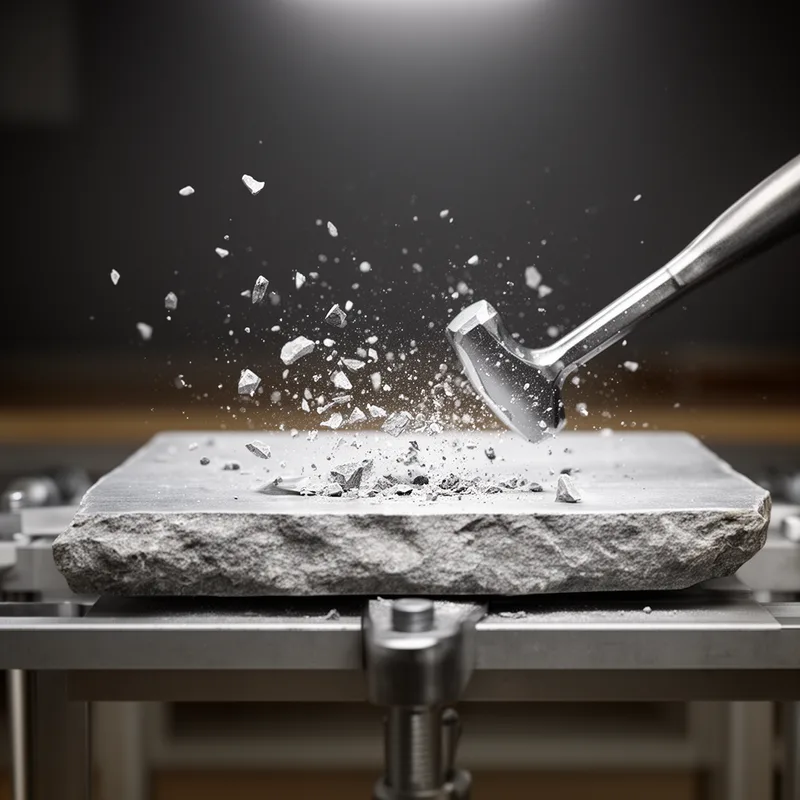
Spallation comes from the verb spall, which means 'to chip off' or 'to break into fragments', like when a hammer makes chips fly from a surface. So spallation is the process where pieces are thrown off a material by impact, stress, or fast particles.