
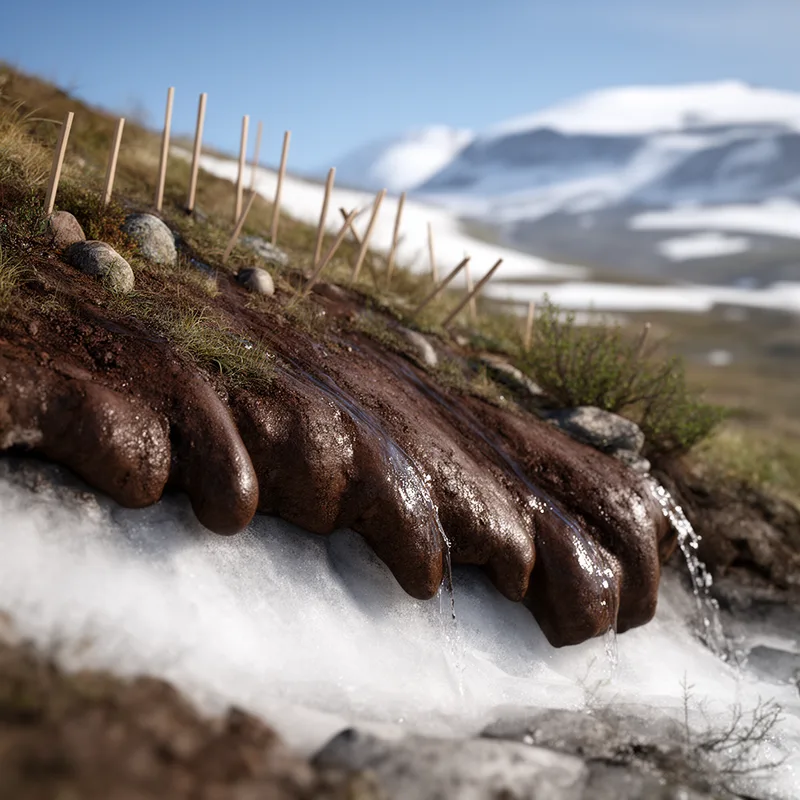
solifluction


 1
9.9
- noun
- /ˌsɒlɪˈflʌkʃən/
- UK
- The solifluction process can alter landscapes significantly.
Examples
-
After the snow melted, evidence of solifluction could be seen in the uneven ground.
-
The tundra landscape was shaped by years of solifluction during seasonal thaws.
-
Scientists studied the effects of solifluction on the stability of mountain slopes in Alaska.
-
During spring, solifluction occurs as the ground thaws.
-
During the spring thaw, solifluction caused the topsoil to slowly creep down the hillside.
-
In the cold tundra, solifluction is responsible for the gradual shifting of the soil layer.
-
Scientists studied solifluction patterns to understand how climate change affects soil movement.
Antonyms


How Fast

Surface Forms
Morphology
Etymology
Solifluction comes from the Latin words solum meaning 'soil' and fluere meaning 'to flow'. So, solifluction names the slow downhill 'flow' of wet soil, especially when the ground thaws.