
sinusoid
9.9
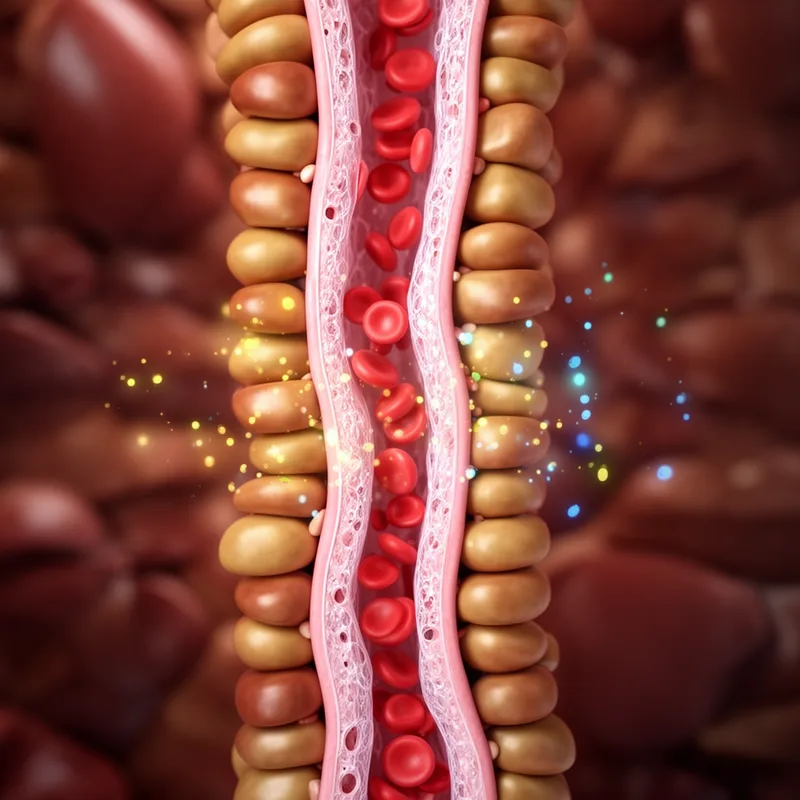
A small blood vessel with a thin wall that lets blood flow slowly through organs like the liver
- noun
- /ˈsaɪnəˌsɔɪd/
- Specialized
:
sinusoide
- Their study showed histopathologic findings in which the epithelium was found to be intact, with near-total elimination of the seromucinous glands and venous sinusoids.
Examples
-
In the liver, blood flows through specialized structures known as sinusoids, which allow for nutrient exchange.
-
Venous vessels and sinusoids
Academic text (2008) -
Of note, marked haemophagocytosis was detected within the spleen sinuses and liver sinusoids.
Academic text (2000) -
The spleen contains sinusoids that filter blood and remove old or damaged red blood cells.
-
Researchers found that sinusoids in the bone marrow play a crucial role in the production of blood cells.
How Wide


Surface Forms
Morphology
Etymology
Sinusoid comes from Latin sinus 'bay' or 'fold' and the ending -oid meaning 'like'. So in anatomy a sinusoid is a tiny blood vessel that looks like a small bay or open space where blood moves slowly.