
to singed
3.0
To burn something lightly on the surface
- verb
- /sɪndʒd/
:
quemar
- The edges of the paper were singed by the candle flame.
Examples
-
The chef singed the edges of the steak.
-
He singed the tips of his hair while lighting the barbecue.
-
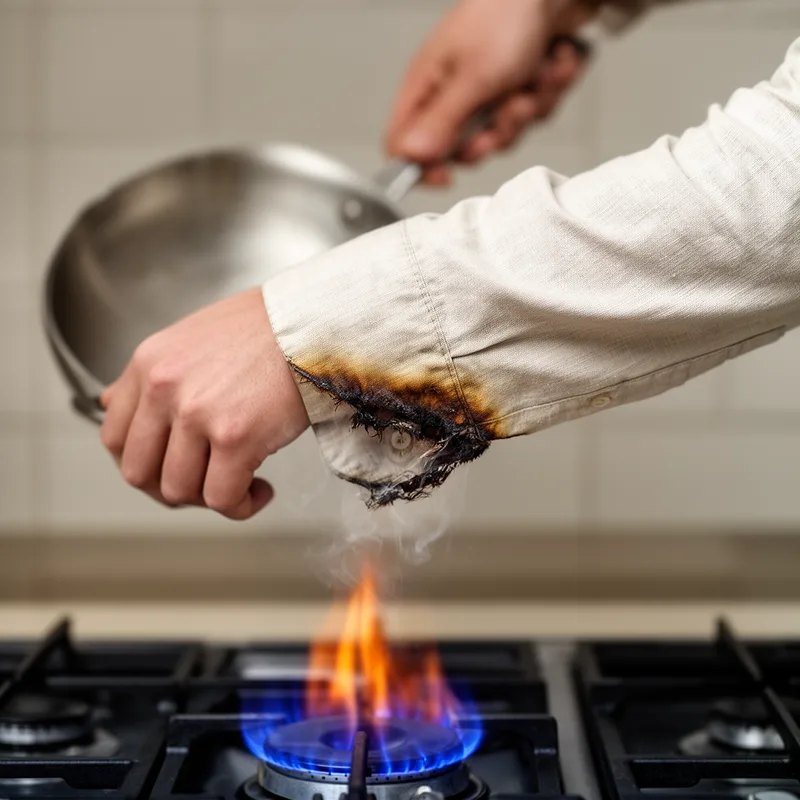
She accidentally singed her sleeve while reaching over the stove.
-
She accidentally singed her hair while cooking.
-
The edges of the paper were singed by the candle flame.
-
She accidentally singed her sleeve while reaching over the stove.
-
He singed the tips of his hair while lighting the barbecue.
Synonyms

to burn
vsto singed
 ∞
1.0
∞
1.0

To be on fire or damage something with heat
is only a light surface char and avoids full destruction

to scorch
vsto singed
20
3.5
To burn the surface slightly and make a brown mark
is lighter showing slight charring rather than deep burning

to singe
vsto singed
6
4.2
Burn the surface of something lightly with heat or flame
has identical meaning but differs only as a form variation
Antonyms

How Burned

Surface Forms
Morphology
Etymology
Singed (verb) comes from the old English singe, meaning 'to burn a little', and it keeps that image: to singe something is to burn its surface lightly without destroying it.