

sickle
 21
5.6
21
5.6

- noun
- /ˈsɪkəl/
- Get the oxen, the plows, sickles, spades, everyone!
Loading YouTube…
Watch on YouTubeIt's an apparatus that cuts hay and a sickle blade is a triangle like this.
- It's an apparatus that cuts hay and a sickle blade is a triangle like this.
- But we need to harvest, and I have the perfect tool for it, the hand sickle.
- Tell him about that, that sickle that hit Barry.
Examples
-
Mr. Brown sat in the driveway, the sickle-shaped dimple in his fender looking jauntier than ever.
Fiction book (1994) -
There was still a moon in the black sky, a half-full sickle; the stars blinked.
Fiction book (2001) -
I got him down to the creek, where my sickle lay upside the "simmon tree."
Fiction book (2001) -
"Shane's voice, a raspy whisper, cut the temporary silence like a sickle slashing dry wheat."
Fiction book (2001) -
The header's revolving reel mechanism swept the grain across a sickle-like mowing blade.
Fiction book (1993) -
Farmers traditionally use a sickle to cut grass during the harvest season.
-
She swung the sickle smoothly, making quick work of the tall weeds in the garden.
-
With a sharp sickle in hand, he carefully harvested the ripe grain from the fields.
Synonyms

A small hand tool with a curved blade and short handle for cutting wheat and grass

A hand tool with a curved blade and short handle for cutting grass or crops
Compounds

- Specialized
10
4.3
A red blood cell with a crescent shape that can block small blood vessels

- Specialized
3
4.1
An inherited blood illness in which red blood cells become crescent shaped, causing low red blood cell count and pain


- Specialized
1
3.4
A blood condition passed from parents that makes red blood cells crescent-shaped and causes pain

A small rainforest tree from Indonesia and Malaysia with sickle-shaped leaves

- Specialized
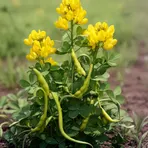
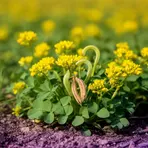
A plant with yellow flowers and curved seed pods grown for animal feed


- Australian
A New Caledonia rainforest tree with pale sickle-shaped leaves and a cone-shaped crown
How Big

Surface Forms
Etymology
Sickle comes from an old Germanic word for a small, curved cutting tool, and you can still see relatives in German (Sichel) and Dutch (sikkel). Think of a crescent-shaped blade that 'cuts' grain close to the ground, which is why the tool has that name.