
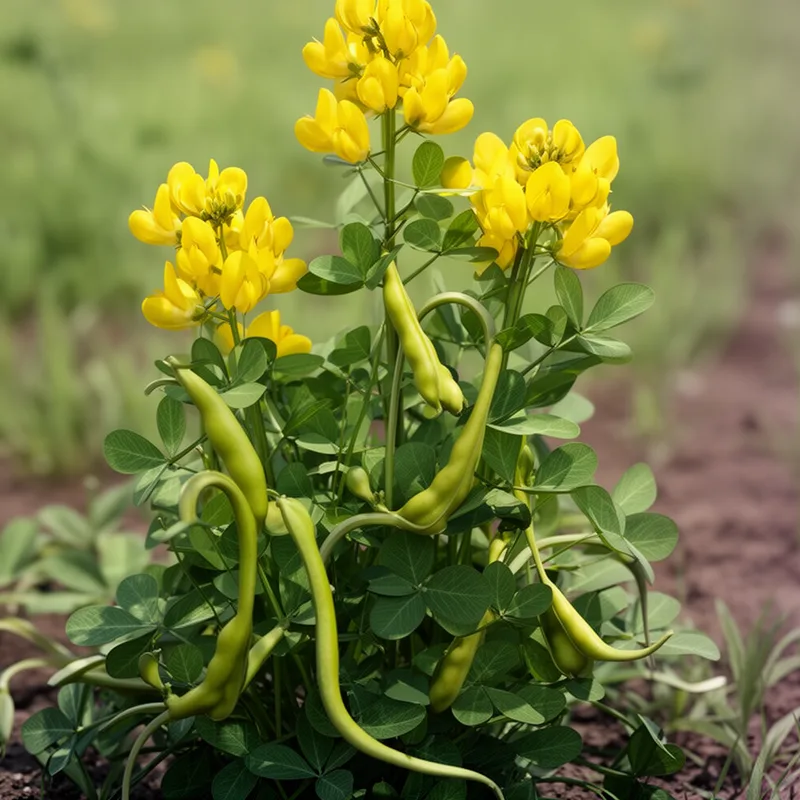
sickle lucerne
- noun
- UK
- You can identify sickle lucerne by its bright yellow flowers and distinctive curved seed pods.
Examples
-
The farmer planted sickle lucerne to improve the soil quality in his pasture.
-
In some regions, sickle lucerne is valued as both a forage crop and a cover plant.
-
The sickle lucerne blooms beautifully in spring.
-
Farmers often grow sickle lucerne for its nutritious value.
-
In some regions, sickle lucerne is valued as both a forage crop and a cover plant.
-
You can identify sickle lucerne by its bright yellow flowers and distinctive curved seed pods.
-
The farmer planted sickle lucerne to improve the soil quality in his pasture.
Synonyms

A plant with yellow flowers and curved seed pods grown for animal feed

A European plant with bright yellow flowers and curved seed pods
A clover plant with yellow flowers and curved seed pods like a sickle
Surface Forms
Morphology
The noun phrase is a straightforward descriptive compound: 'sickle' modifies 'lucerne', so a learner who knows both words can infer it denotes a lucerne (a legume) with sickle‑shaped parts (e.g., seed pods or leaves). This adjective+noun composition follows common, cross‑linguistic descriptive patterns, making the overall meaning directly derivable from the constituents.
Etymology
Sickle lucerne gets its name from its curved seed pods that look like a sickle and from lucerne, an old word for alfalfa, a plant used as 'animal feed'. So the name gives a simple picture—curved pods and a useful forage plant—which helps you remember what the plant is.

