

to set off
 57
2.4
57
2.4

- phrasal verb
- /sɛt ɔf/
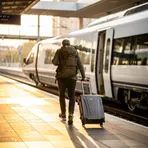
- Early in the morning, we set off on our road trip to the mountains.
- set off to find
- set off in search of
- then set off
Loading YouTube…
Watch on YouTubeAnd eventually we got back in the plane and set off and landed in Egypt.
- And eventually we got back in the plane and set off and landed in Egypt.
- You know, I set off with no plans except to be a way for at least a year.
- We get to the release point and then we the three of us set off on foot into the into this army division.
- And then when I set off, you're wearing spikes on a very hard surface and it's digging into packed dirt, which is what the strip is that you're bowling on.
Examples
-
Having secured various official endorsements, Dixon set off on his tour in June 1913.
Academic text (2002) -
On my second day in Pindaya, I set off to visit the caves.
Academic text (2003) -
Well, tomorrow, we set off for the greatest war of them all!
-
We set off at first light!
-
Four years later, the England squad set off to the 2006 World Cup with high hopes.
-
I needed no encouragement, and on Tuesday we set off at the usual time.
Fiction book (1994) -
And I shall have to set off tomorrow, as it is a six-week journey.
-
Mike and I were supposed to be setting off on a cruise around the Adriatic tomorrow.
-
Early in her career she set off to do field work in the Melanesian Islands of Papua New Guinea, north of Australia.
-
A large expedition of Spanish adventurers, led by Pizarro, set off from the Peruvian sierras in late 1560.
Academic text (1993)
Synonyms
 ∞
1.0
∞
1.0
To begin an action, event or process
 422
2.3
422
2.3
To start doing something or to leave
 273
3.2
273
3.2
To leave a place quickly, often to travel somewhere else
 176
1.3
176
1.3
To leave a place to start a journey
 167
2.5
167
2.5
To leave a place to start a trip
 117
4.7
117
4.7
To start a new, important, or difficult activity
 95
4.2
95
4.2
To start a new project, activity or journey that is often big and difficult
 90
2.5
90
2.5
To leave a place and start a journey by car or bus
 66
2.4
66
2.4
To begin a journey to go to another place
 39
2.5
39
2.5
To leave a place to go to another place
 14
2.5
14
2.5
To leave one place to go to another place
 3
3.9
3
3.9
To begin a journey to a place
Antonyms


How Quickly
- Informal
90
2.5

- Informal
2
9.5
57
2.4
∞
1.0
207
3.7
- Informal
407
2.0
Surface Forms
Morphology
The sense 'to counterbalance or compensate' is not directly derivable from 'set' (to place or initiate) + 'off' (away), so an average B1 learner knowing the words would likely not predict this specific meaning. There is a loose metaphorical link (off as neutralizing or cancelling), and particle-verb patterns can signal altered meanings, so the relation is partially transparent but requires prior exposure.
Etymology
Set off comes from the simple image of pushing a cart or wagon so it moves away — you set it and it goes off down the road. So the phrase came to mean 'to begin a journey'.