
seigneurial
- adjective
- /seɪnˈjʊrɪəl/
- Archaic
- But seigneurial lords were important in the early modern French countryside.
- seigneurial family
- seigneurial authority
- seigneurial rights
Examples
-
Well before the Reformation, these private chapels were a long-standing feature of the seigneurial presence in rural parish life.
Academic text (2018) -
The highest preeminence in a church was granted to its reputed founder, which in many parishes was the leading seigneurial family.
Academic text (2018) -
Above all, to judge the impact of seigneurial influence, a detailed study of the responses of specific rural communities is required.
Academic text (2018) -
But seigneurial patronage was also important in establishing and maintaining these groups.
Academic text (2018) -
Seigneurial patronage could help advance the training of good clergy.
Academic text (2018) -
The wives and daughters of seigneurial families were particularly notable participants in the new spirituality.
Academic text (2018) -
Seigneurial involvement in parish religion went further than the embellishment of buildings and worship, however.
Academic text (2018) -
Seigneurial families provided personnel, appointed to benefices, and sponsored visiting preachers.
Academic text (2018) -
Through financial support, personal enthusiasm, and the sponsorship of seigneurial families, the devotional priorities of Catholic Reform were made present in country parishes.
Academic text (2018) -
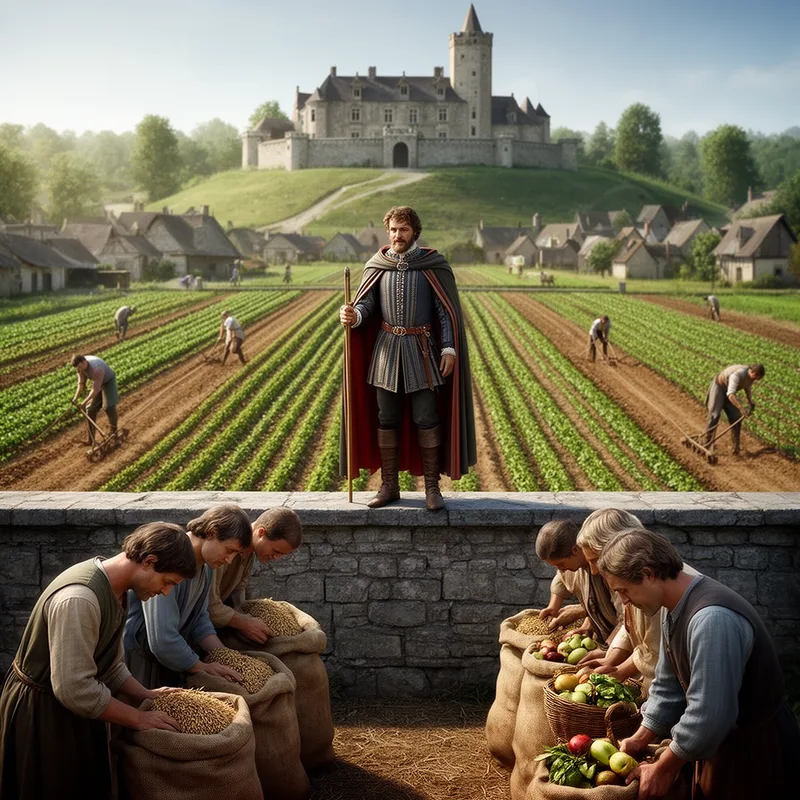
The seigneurial system established a clear hierarchy in medieval society, with lords holding vast lands.
Synonyms

 19
7.7
19
7.7

A system where lords own land and farmers work it for protection


 1
9.5
1
9.5
A society where a few owners of land have power and many people work for them

About a lord's rights and duties, especially in the Middle Ages

About a lord and the rights and duties he had over land

Relating to the rights and power of a feudal lord
Surface Forms
Morphology
Etymology
Seigneurial comes from the French word seigneur, meaning 'lord', a name for the landowners in the old system of lords and lands. That's why seigneurial is used for things that relate to those feudal lords or their land, like old rights, houses, or traditions.