
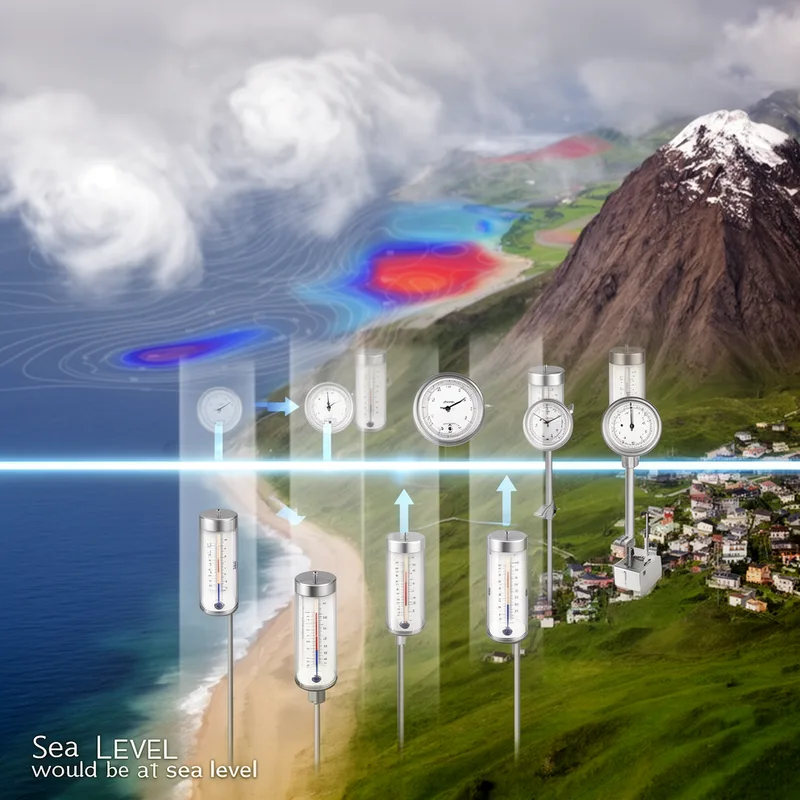
sea-level pressure


 1
3.7
1
3.7
- noun
- /ˈsiːˌlɛvəl ˈprɛʃər/
- Specialized
Examples
-
The standard sea level pressure is 29.92.
-
At 40,000 feet, it's less than half of sea level pressure.
Blog text (1) -
P naughty is the sea level pressure and Z is the elevation in kilometers.
-
How will the intense, widespread low sea level pressure of this storm affect methane clathrates?
Blog text (18) -
The average sea-level pressure at the shore is typically around 1013 hPa.
-
Meteorologists use sea-level pressure to predict weather patterns and storms.
-
A low sea-level pressure indicates that a storm could be approaching the coastline.
How High

Surface Forms
Morphology
sea-level + pressure
The phrase is compositionally built from 'sea' + 'level' and 'pressure' so a learner who knows those words can infer it refers to pressure associated with the sea's level (i.e., the standard pressure value at sea level). The precise meteorological detail about adjusting readings to an equivalent sea-level value is technical, but the basic meaning is directly derivable from the constituents and is cross-linguistically transparent.
Etymology
Sea-level pressure literally joins sea-level, meaning the height of the sea, and pressure, meaning the weight of the air; weather people 'adjust' readings from hills and mountains down to the sea so every place is on the 'same level'. That's why maps use sea-level pressure to easily compare high and low pressure across different places.