
saturated fatty acid
- noun
- /ˈsætʃəˌreɪtɪd ˈfæti ˈæsɪd/
- Informal
- We should also mention that trans and saturated fatty acids are reported to raise, whereas n-3 polyunsaturated fatty acids lower plasma a-lipoprotein levels.
Loading YouTube…
Watch on YouTubeAnd so that is how you make saturated fatty acids.
- And so that is how you make saturated fatty acids.
Examples
-
Indeed, these Bantu people eat a very low amount of saturated fatty acids and total fat, and the lower plasma cholesterol concentrations in the fish-consuming group may therefore be attributed to n-3 polyunsaturated fatty acids.
Academic text (2000) -
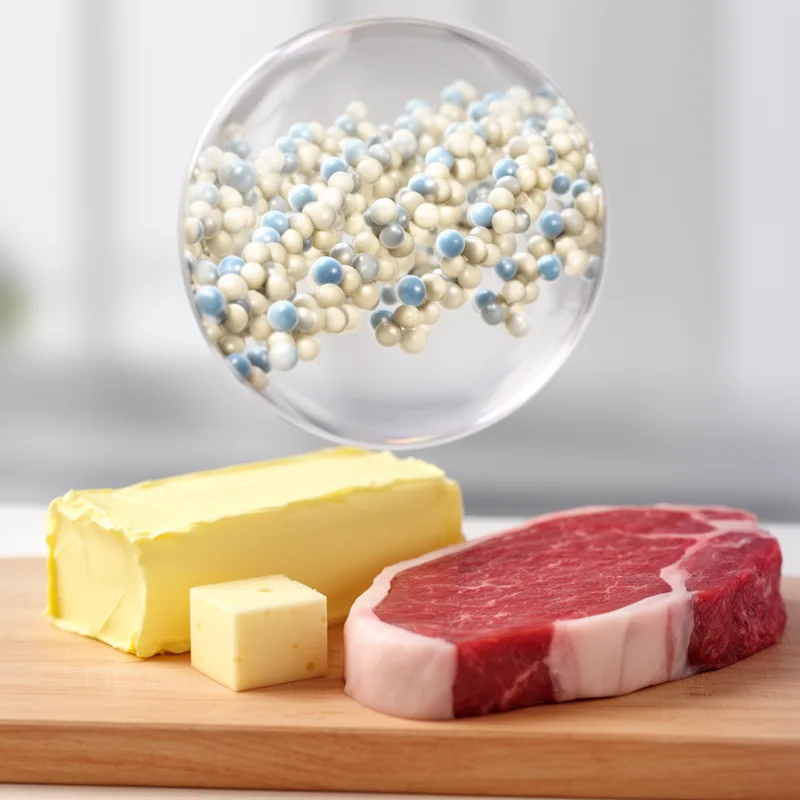
The body produces saturated fatty acids, but they are also abundant in meat and full-fat dairy products.
-
Overall, the F3 populations revealed increased mean values for oil content, linoleic acid, stearic acid, and the ratio of unsaturated/saturated fatty acids, while for other traits the mean values were not significantly different.
Academic text (2015) -
Overall, the F3 populations revealed greater mean values than parental genotypes for oil content, linoleic acid, stearic acid, and the ratio of unsaturated to saturated fatty acids, while for other traits, the average mean values were comparable.
Academic text (2015) -
Foods high in saturated fatty acids, such as butter and cheese, are often recommended to be consumed in moderation.
-
Saturated fatty acids, which are primarily found in animal fat, can solidify at room temperature.
Antonyms

How Unhealthy
- Specialized
 1
4.0
1
4.0


- Informal
- Specialized
- Specialized
1
3.5
Surface Forms
Morphology
The phrase is compositionally built: 'saturated' modifies 'fatty acid' and thus a learner who knows the constituents can infer it is a type of fatty acid that is 'full' or has a particular chemical condition. However, the precise technical meaning (absence of carbon–carbon double bonds / inability to absorb more hydrogen) is specialist chemistry knowledge and not fully predictable from everyday senses of the words, so comprehension is only partial for a B1 learner.
Etymology
Saturated fatty acid uses saturated in the everyday sense of 'full' and fatty acid for a fat molecule. Imagine a chain of carbon atoms like a row of empty seats; when every seat is filled with hydrogen atoms, the chain is 'saturated' and cannot take more. That's why saturated fatty acid means a fat molecule that is 'full' of hydrogen and is often found in animal fats.