

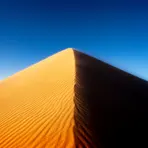
sand dune
 15
3.2

- noun
- /sænd duːn/
- The tour guide explained how the wind shapes the tall sand dunes in the desert.
- coastal sand dune
Loading YouTube…
Watch on YouTubeThey used to have these sand dune hills out there and my dad, he had a Ford Explorer, like sport Trac Explorer type thing.
- They used to have these sand dune hills out there and my dad, he had a Ford Explorer, like sport Trac Explorer type thing.
Examples
-
Let's slip off to a sand dune real soon
-
The kids came over to me and said, "Papa, Papa! Follow me," and... you know... I followed them about 200 yards across the sand dunes.
-
Way down there in the sand dunes.
-
And then I went to camp and fell down a sand dune...
-
My father caught us out in the sand dunes one night.
Fiction book (2001) -
We'd run up the sand dune and lay there and look at the stars.
-
Viewed from the sand dunes to the north, golden beach stretches as far as you can see.
Academic text (1999) -
Establishing shot of the fort as the setting sun creeps over the sand dunes.
Fiction book (1998) -
Each year, along this mix of sandy beaches and sloping sand dunes, an actual memorial takes place.
Academic text (2009) -
Last week, Davenport's class met in sawgrass-covered sand dunes with the ocean pounding away in the background.
Fiction book (2000)
Synonyms
 58
2.7
A hill of sand that wind makes on a beach or in a desert
 3
3.8
A low hill made of loose sand often near coasts or in deserts


 1
9.9
A crescent sand dune moved across deserts by wind

A long narrow sand hill with a sharp top that runs with the wind in deserts like the Sahara
How Big

Surface Forms
Morphology
The meaning of 'sand dune' is directly and transparently derived from combining 'sand' and 'dune' — a dune is a hill of sand, so the compound simply specifies the material. This compositional pattern is literal and cross-linguistically common, so a B1 learner who knows both constituents will readily understand it.
Etymology
The noun sand dune is a very literal name: it pictures loose sand piling into a small hill called a dune when the wind blows. That's why it means 'a hill or ridge of sand formed by the wind'.