
ruminant
 1
7.2

- adjective
- /ˈruːmɪnənt/
- Specialized
- "If we can find bacteria that produce more active xylanases, this ethanol research might also lead to improving the efficiency with which ruminant livestock, such as cattle and sheep, digest hemicellulosic crop residues," says Hespell.
- ruminant animals
Examples
-
He is also involved in research on ruminant microbiology.
Academic text (1996) -
Bone structure appears related to anatomy of ruminant mammals constituting the genus Ovis Bovidae, closely allied to Ovis Aries.
-
So the there is that, and again, I'm talking beef, but this is any ruminant animal.
-
And it seems that many carnivores just do better on a ruminant heavy diet.
-
He went there to work on small ruminant livestock improvement projects.
Blog text (7) -
Methane is also produced by the digestive processes of ruminant animals and termites.
Academic text (1997) -
So in contrast to ruminant animals, so elk, bison, deer, antelope, cows, those are ruminants.
-
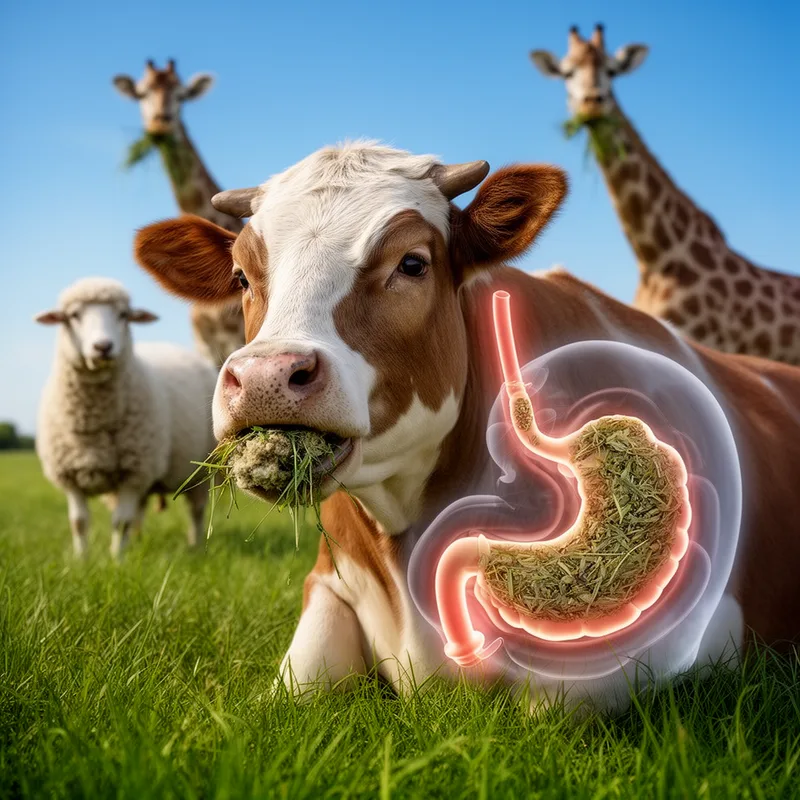
Cattle and sheep are examples of ruminant animals that chew their food multiple times.
-
Farmers often rely on ruminant livestock, like cows and goats, for milk and meat.
-
The digestive systems of ruminant species are adapted to efficiently process tough plant materials.
Antonyms
Surface Forms
Morphology
Etymology
Ruminant as an adjective also comes from the Latin verb ruminare 'to chew the cud' and shares its root with the English verb ruminate, which can mean to 'chew over' an idea. So ruminant describes animals, like cattle or deer, that digest food by bringing it back up and chewing it again.