
nonruminant
- adjective
- /ˌnɒnˈruːmɪnənt/
- Specialized
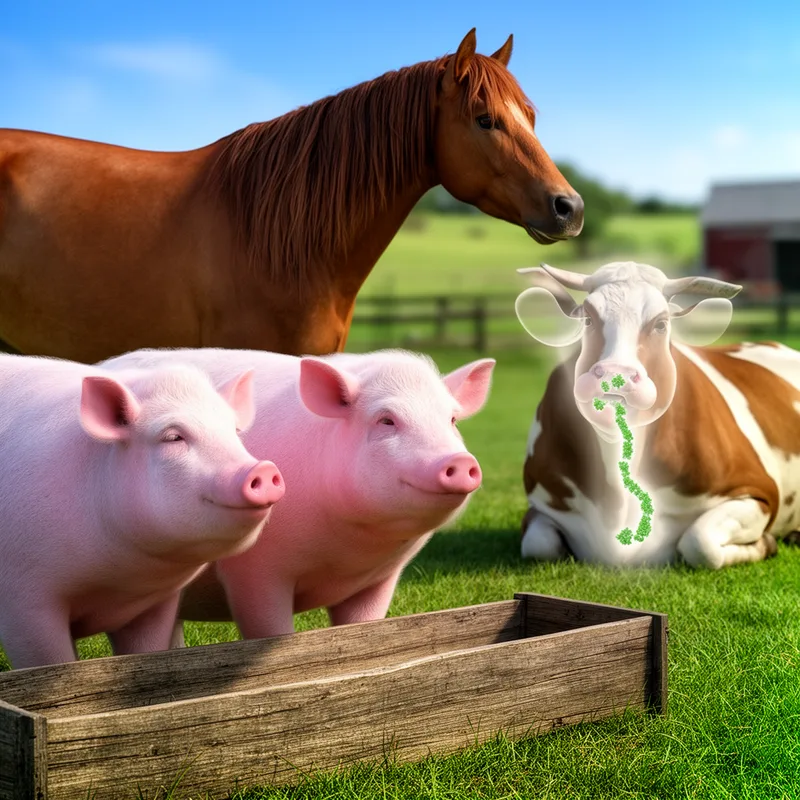
- Pigs and horses are considered nonruminant animals because they do not chew cud.
Examples
-
A cow is a ruminant, while a horse is a nonruminant animal.
-
The diet of a nonruminant species typically differs from that of a ruminant.
-
Researchers compared growth rates between the nonruminant rabbits and the ruminant sheep.
-
Many nonruminant species have different digestive processes.
-
Pigs and horses are considered nonruminant animals because they do not chew cud.
-
The diet of a nonruminant species typically differs from that of nonruminant ruminants.
-
Many nonruminant species, such as pigs and horses, have simpler digestive systems.
Antonyms


Surface Forms
Morphology
Etymology
Nonruminant is made of the part non- meaning 'not' and ruminant, from a word that means 'to chew the cud'. So a nonruminant animal is 'not' a cud-chewer, for example pigs and horses, which do not have the special multi-part stomach cows use to re-chew their food.