

rule
 185
2.0

- noun
- /ruːl/
- Instead, the comments focused on the application of the rule to specific situations.
- rule of law
- majority rule
- military rule
Loading YouTube…
Watch on YouTubeSo in essence, you have this minority rule by design.
- So in essence, you have this minority rule by design.
- It's an assault on whatever rule consciousness has in being.
- Well, there's rule of law that you can trade.
Examples
-
As of this writing, all Michigan cities have home rule and enjoy a high degree of fiscal autonomy.
Academic text (2017) -
Always remember the golden rule.
-
It's a story of bringing new laws and new rules into the culture.
-
The first rule of fashion is you have to look weird.
-
Their leader said their hatred of Rome was such that all they wished was to escape from her rule.
-
Liberalism stressed the importance of the rule of law, limited government, and free commercial transactions.
Academic text (2012) -
We have new FTC rules that ban non compete agreements.
-
Back then, no one could have anticipated the rule's modern-day democratic ramifications.
Academic text (2017) -
How does the successful transition from authoritarian rule in Korea lead to consolidated democracy?
Academic text (1999) -
The teacher established a new rule for classroom behavior to promote respect among students.
Synonyms
 ∞
1.0
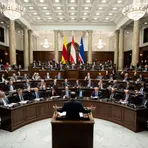
The group of people who officially run a country
 875
3.5
Power to give orders and make people obey
 595
6.1
A government that rules a country, often not democratic and strict
 92
5.6
How a country or organization is run and who makes decisions
 29
7.7
Power to govern and control a territory or people
 27
3.5
The act of controlling and directing a country, organization or group
 19
3.4
A group of people or organization that manages and sets rules for an institution
 6
3.4
Carrying out laws and court decisions by officials
 2
7.5
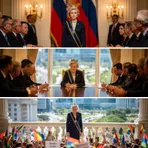
The time a leader has power over a country
Antonyms


Idioms




Compounds

- Formal
99
3.7
All people and organizations, including officials, must follow the same fair laws

- Informal
34
3.8
A simple practical way to do or decide things from experience that is not exact

- Formal
33
7.9
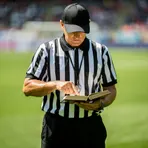
A guide that tells military and other people when they can start fighting and what they may do








- Formal
6
8.6
A rule that stops people in a committee or parliament from talking about a topic

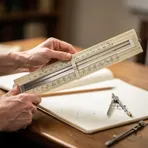
- Archaic
5
8.5
A long thin tool with sliding scales that people use to do quick math before calculators

- Formal
5
6.2
The right of a city or county to run its own local matters without central government control
- Formal
3
8.6
A rule that stops illegally found evidence from being used in a criminal trial


- Specialized
1
9.3
A rule that stops statements made outside court from being used as evidence





- Formal
 1
6.2
Police must tell someone arrested they can stay silent, have a lawyer, and anything said can be used in court
- Formal
1
9.0
A rule that requires showing the original document, photo, or recording in court to prove its content
 1
7.0
A simple practical way to decide what to do from experience to solve problems faster


- Formal
1
9.9
A rule that stops people using spoken words to change a written contract in court


- Specialized
1
5.9
A clear step-by-step rule for solving a problem using math or a computer

- Specialized
1
7.6
A way to show how words are made from small parts like un- and -ness

 1
4.7
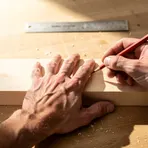
A flexible tool like a ruler with length marks used to measure and draw straight lines

- Informal
1
8.7
An informal rule that people do not tell others about things that happen on a trip




- Literature
An informal guideline that picture parts should not extend above a diagonal from left to right

- Specialized
A way to find a baby's due date by using the first day of the last period

- Formal
A strict rule applied the same to everyone that ignores personal differences


- Formal
A court changes a gift meant for a charity so the giver's main wish still happens

- Specialized
A straight narrow board with a hanging weight used to check if a wall is perfectly vertical

- Informal
A belief that food dropped on the floor for less than two seconds is still safe to eat
How Authoritative

Surface Forms
Etymology
Rule (power or government) comes from the Latin words regula ('straight stick' or 'guide') and regere ('to lead'). A leader was seen as someone who 'kept things straight', so rule came to mean the power to lead and govern.