

to rule
 607
1.0
607
1.0

- verb
- /ruːl/
- The queen has long been known to rule with a firm hand over her kingdom.
- rule the country
- government rules
- rule the people
Loading YouTube…
Watch on YouTubeAnd he says each person rules within their domain.
- And he says each person rules within their domain.
- Does it rule despotically or should it rule in a different way?
- Second, who's going to rule in Washington DC?
- They back to Asian, but the Asians are ruling the world our world.
- let me write the music and I will rule your country.
- You stop letting other people rule your life based on what they think.
- You could rule or not rule, and there's a perennial problem.
- Doing battle fighting to rule the rock.
- And I'm AI rule by I guess, democracy.
- The Elevens came in, swooped them out, and they ruled better.
Examples
-
Occasionally, indigenous women could also be found ruling in other areas of the colonial Andes.
Academic text (1999) -
In his everyday life, man rules over machine.
-
let me write the music and I will rule your country.
-
It's because he wants to rule the world.
-
Who knows who will end up ruling this ocean planet?
-
We shall rule because it's our glorious destiny to rule.
-
By combining our genius, we can rule humanity.
-
In the north, the Starks ruled from their castle at Winterfell.
-
Do you choose to govern yourselves or be ruled by those who still crave the name of 'master'?
Academic text (2017) -
At the time, both Jordan and Iraq were constitutional monarchies ruled by members of the Hashemite family.
Academic text (2013)
Synonyms
 ∞
2.4
∞
2.4
To have power over people, things, or situations
 171
2.9
171
2.9
To rule a country using law or force
 60
4.6
60
4.6
To rule a country as king or queen
 23
4.2
23
4.2
To be in charge of people or a place
Antonyms


Idioms



Phrasal Verbs


Compounds

- Formal
89
3.7
All people and organizations, including officials, must follow the same fair laws

- Informal
31
3.8
A simple practical way to do or decide things from experience that is not exact

- Formal
26
7.9
A guide that tells military and other people when they can start fighting and what they may do





- Formal
5
8.6
A rule that stops people in a committee or parliament from talking about a topic


- Archaic
5
8.5
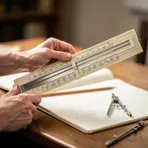
A long thin tool with sliding scales that people use to do quick math before calculators

- Formal
4
6.2
The right of a city or county to run its own local matters without central government control
- Formal
3
8.6
A rule that stops illegally found evidence from being used in a criminal trial



- Specialized
1
9.3
A rule that stops statements made outside court from being used as evidence


- Formal

 1
9.0
1
9.0
A rule that requires showing the original document, photo, or recording in court to prove its content




- Informal
1
5.3
A belief that food dropped on the floor for less than two seconds is still safe to eat
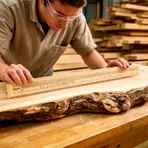


A flexible tool like a ruler with length marks used to measure and draw straight lines

- Specialized
A clear step-by-step rule for solving a problem using math or a computer


- Formal
Police must tell someone arrested they can stay silent, have a lawyer, and anything said can be used in court

- Specialized
A way to show how words are made from small parts like un- and -ness

- Literature
An informal guideline that picture parts should not extend above a diagonal from left to right
A simple practical way to decide what to do from experience to solve problems faster

- Specialized
A way to find a baby's due date by using the first day of the last period

- Formal
A strict rule applied the same to everyone that ignores personal differences


- Formal
A court changes a gift meant for a charity so the giver's main wish still happens

- Formal
A rule that stops people using spoken words to change a written contract in court

- Specialized
A straight narrow board with a hanging weight used to check if a wall is perfectly vertical

- Informal
An informal rule that people do not tell others about things that happen on a trip


How Powerful

Surface Forms
Etymology
Rule (to govern) comes from the Latin regere ('to lead'), the same idea behind the noun for power. To rule is to lead or have authority over people, just like a leader who keeps things straight.