
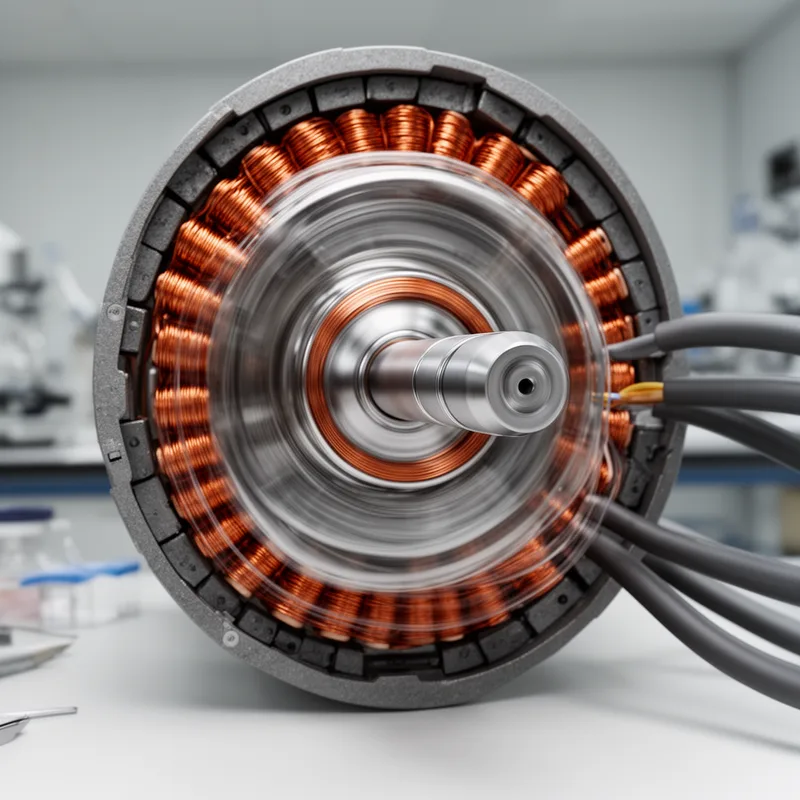
rotor
 2
5.2
2
5.2

- noun
- /ˈroʊtər/
- Specialized
- The generator itself has two basic parts: the stator, which is stationary, and the rotor, which rotates.
- rotor and stator
- motor rotor
- generator rotor
Loading YouTube…
Watch on YouTubeNow this will start to give us some clues to why I can just pivot my hand like this and it speeds up the rotor inside.
- Now this will start to give us some clues to why I can just pivot my hand like this and it speeds up the rotor inside.
Examples
-
When the rotor turns, it creates a magnetic field that powers the generator's output.
-
The only moving part is the motor rotor, which is mounted on magnetic bearings.
Academic text (1996) -
Seems like there is no force on the rotor, maybe more speed?
-
I can hear the the rotor at the back moving and that second hand is moving, but then it stops.
-
So we have this rigid rotor and it's rotating about the center mass.
-
The interaction between the two magnets caused the rotor to turn half a revolution.
Academic text (2000) -
As a result, the air exiting the other side of the rotor can be discharged into the atmosphere.
Academic text (2000) -
Reversing the current causes the rotor to rotate to its second position.
Academic text (1995) -
The rotor in the electric motor spins rapidly to generate energy as it rotates inside the stator.
-
The technician replaced the damaged rotor to restore the functionality of the generator.
Synonyms

Coiled wire on the motor's rotating part that carries electric current and makes it turn
Antonyms

- Specialized
1
8.5
The part of a motor or generator that does not move and surrounds the rotating part
Compounds

- Specialized
4
6.8
A small spinning blade at the tail of a helicopter that keeps it from spinning


- Specialized
1
4.5
A large set of spinning blades on a helicopter that lifts it into the air

- Specialized
Coiled wire on the motor's rotating part that carries electric current and makes it turn
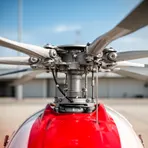


A helicopter that has one main spinning blade and a tail rotor for balance
Surface Forms
Morphology
Etymology
Rotor comes from the Latin root rot- (as in rotate) meaning 'to turn'. In a motor or generator the rotor is the part that spins inside the non-moving part called 'stator', and that turning is what makes or uses electrical energy.