

rhyme
 42
1.8
42
1.8

- noun
- /raɪm/
- No one left to be "butchers and bakers and candlestick makers," as the old nursery rhyme put it.
- nursery rhyme
- children's rhymes
- sing nursery rhymes
Loading YouTube…
Watch on YouTubeSo you'll leave this video knowing why rhymes fill so many pages.
- So you'll leave this video knowing why rhymes fill so many pages.
- He, he wrote a poem called the Rhyme of the Ancient Mariner.
- And I love that beat and I love those rhymes.
- That just sounds like a new age Henry the Eighth rhyme.
- If he says that in the rhyme, I'll be like, yeah, that's possible.
- But the most personal thing is this thing I've come to now, this book of kids rhymes.
- You say I want you to make me a rhyme that doesn't exist, but in the style of a Drake or in the style of a Kanye.
- Is it based on for his for his next rhyme and the butterflies in his stomach?
- And he was like, and he made the because I had wrote the rhyme to the four armor beats.
- That's where the whole thing has been covered in those those bits of rhyme.
Examples
-
The nursery rhyme... is part of our family history.
-
A first-grade theatre lesson focused on nursery rhymes, highlighting how a teacher might scaffold language learning and comprehension.
Academic text (2013) -
Like the fine lady in the nursery rhyme, "She shall have music wherever she goes."
Academic text (1997) -
This is nothing, it's a silly nursery rhyme.
-
I think we'll survive a scary nursery rhyme.
-
I liked nursery rhymes for a while.
-
"Do you tell your children the nursery rhymes and tales that your families passed down to you?
Academic text (2005) -
Blithely, their mother sang nursery rhymes as she marched ahead.
Fiction book (2000) -
It's a very funny poem, and you've got triplet rhymes there to make sure you know that Frost is joking and it feels like light verse.
-
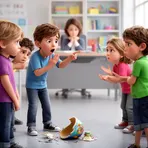
Children often learn catchy rhymes to make bedtime stories more enjoyable.
Synonyms
 766
1.7
766
1.7
A short piece of writing that expresses feelings and ideas with rhythm and style
 77
3.9
77
3.9
Writing with a regular rhythm that often rhymes
 22
5.9
22
5.9
A short, simple song that is easy to sing


 1
4.8
1
4.8
A short poem that shows personal feelings, often like a song
Idioms


- Informal
Saying a rhyme to blame someone shows you are the guilty person
Compounds

- Literature
1
7.3
A pair of words in the same line of a poem that end with the same sound

- Literature
1
4.8
The vowel sound and the sound after it at the ends of lines match exactly

- Literature
Repetition of the same sound at the start of stressed words or syllables in a line of verse

- Literature
A repeat of consonant sounds at the ends of words to make lines sound similar





- Literature
Repeating the same consonant sound at the start of each stressed syllable in a line of verse


- Literature
A repetition of similar vowel sounds in stressed syllables, as in day and say
How Helpful

Surface Forms
Etymology
Rhyme comes from the Old English word rīm, which meant 'verse' or a short line of poetry. Because of that history, rhyme can mean a short poem or verse, like the simple ones children learn.