

reis
- noun
- /reɪs/
- Archaic
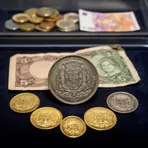
- The Brazilian 20,000 reis gold piece of 1897, one of many Brazilian coins that show the Southern Cross.
Examples
-
The travelers exchanged their euros for reis when they arrived in Brazil.
-
Twenty thousand reis, with interest?
-
For example, when the travelers receive a bill in Portuguese currency, reis, it is incomprehensible to them, and they are convinced they have been overcharged.
Academic text (1997) -
In the 19th century, a loaf of bread cost around a hundred reis.
-
The antique shop had a collection of coins, including old reis from Portugal.
Synonyms

 7
8.9
7
8.9

Old Spanish money replaced by the euro in 2002


 1
3.7
1
3.7
The currency of Brazil, equal to 100 centavos
 1
9.7
1
9.7
An old form of money once used in Brazil
 1
9.9
1
9.9
A former Portuguese unit of money equal to 100 centavos used before the euro

A former Brazilian currency used in the 1980s
Money Portugal used before the euro, equal to 100 centavos

The main money used in Cape Verde is equal to 100 centavos

Money used in São Tomé and Príncipe
Surface Forms
Etymology
Reis is the plural of the Portuguese coin real, a word that originally meant 'royal' and is like the English royal. So reis were 'royal' coins used in Portugal and Brazil, which is why the word names that old money.