
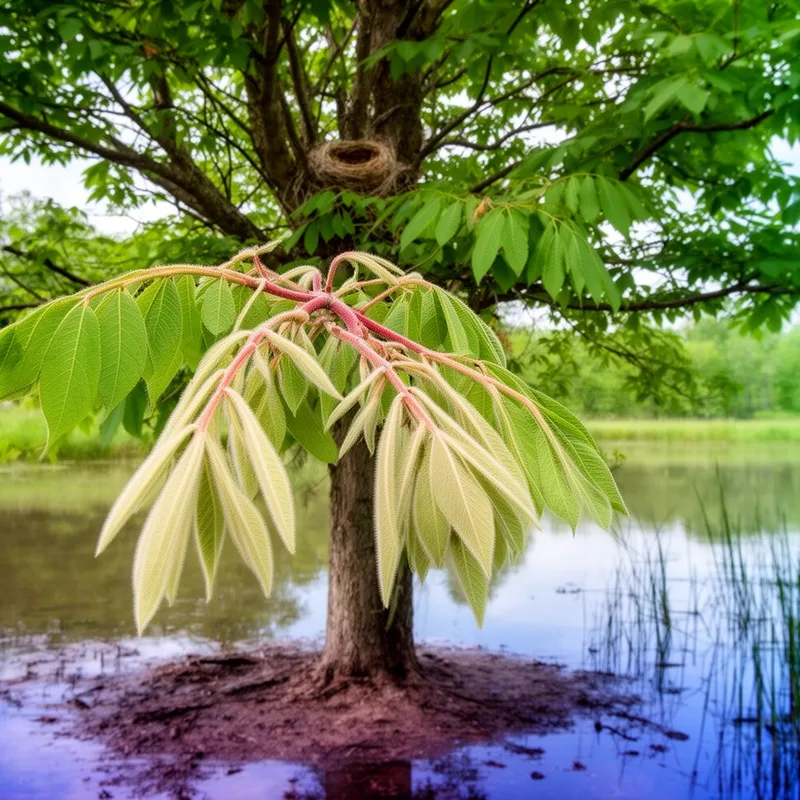
red ash
- noun
- /rɛd æʃ/
- Specialized
- Many birds nest in the branches of the red ash each spring.
Examples
-
The red ash tree grows near the river.
-
Botanists studied the leaves of a red ash to understand its adaptation to wet soils.
-
The park is home to several red ash trees with their distinctive velvety twigs.
-
I saw a beautiful red ash in the park.
-
In the wetlands, the red ash tree thrives in the moist soil and provides shelter for various wildlife.
-
The red ash has distinctive velvety leaves that set it apart from other trees in the forest.
-
You can often find red ash trees growing near rivers and lakes, where the soil remains damp.
Synonyms
A North American ash tree with soft young branches and leaves that are fuzzy underneath, often called green ash
A North American ash tree with lighter colour under its leaves
Surface Forms
Morphology
The phrase is a simple adjective + noun composition: 'red' (a color) modifying 'ash' (a type of tree), so a B1 learner who knows both words will infer it refers to an ash tree with red characteristics. The precise botanical specifics (species name, velvety branches) are specialist information, but the basic meaning as a kind of ash tree is directly derivable and follows common cross-linguistic adjective–noun patterns.
Etymology
The name red ash may come from how the tree's young branches and the undersides of its leaves often look a little red or feel soft and fuzzy. So people used red ash to name that kind of ash tree, and today it means 'a North American ash tree'.

