

to rebound
 19
2.9
19
2.9

- verb
- /ˈriːbaʊnd/
- The serve curved its way across the court, rebounding oddly from the floor and side wall.
Loading YouTube…
Watch on YouTubeIt's swimming or rebounding or exercise bike.
- It's swimming or rebounding or exercise bike.
- But in doing so, he rebounds the ball off of the court floor into the basket.
- It's so far that when you let it go, it's got to rebound in the same way.
Examples
-
Wow, thought Sally, rebounding from the force of the impact.
Fiction book (1995) -
It's so far that when you let it go, it's got to rebound in the same way.
-
The Black players were expected to rebound the ball and pass to the White stars.
Academic text (2014) -
But as soon as they stop therapy, HIV almost always will rebound and actually rebound relatively quickly.
-
Globally protected areas do rebound, but it takes a long time to restore.
-
The ball rebounds to Decker.
-
The Thoroughbreds lost their home opener, rebounding the next night to go .500 on the weekend.
Blog text (1) -
During each heartbeat, the aorta's walls expand to hold the pulse of blood, then rebound elastically to propel the blood downstream.
Academic text (2005) -
The basketball hit the rim and rebounded high into the air before landing in the hands of the player.
-
After bouncing off the backboard, the ball rebounded into the court, creating an opportunity for a fast break.
Synonyms
 386
1.3
386
1.3
To move quickly away from a surface after hitting it, moving up and down in a springy way
 323
6.8
323
6.8
Move back suddenly because of a strong push or impact
 141
1.0
141
1.0
To move suddenly by jumping, leaping, or bouncing
 33
3.4
33
3.4
To hit a surface and move away from it
 25
7.7
25
7.7
To bounce off a surface at an angle after hitting it
 19
4.9
19
4.9
To move quickly backward because of fear, pain, or disgust
 2
6.1
2
6.1
To move back suddenly because of a strong hit
 1
4.4
1
4.4
To hit a surface and bounce away


 1
9.5
1
9.5
To bounce off something and move away at an angle
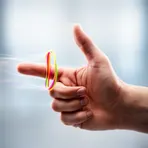
To return to its original shape after being bent, pressed, or stretched
Antonyms

Compounds
- Specialized
1
7.2
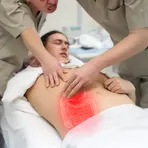
Pain you feel when pressure on the belly is suddenly released, often a sign of swelling in the belly lining
 1
5.2
1
5.2
A romantic relationship someone starts soon after a breakup to cope with hurt
How Strong

Surface Forms
Morphology
Etymology
Rebound comes from the parts re- 'again' and bound 'to jump', so the verb means to 'jump back' or 'bounce back'. That is why we say a ball rebounds off the rim or a mood can rebound after a change.