
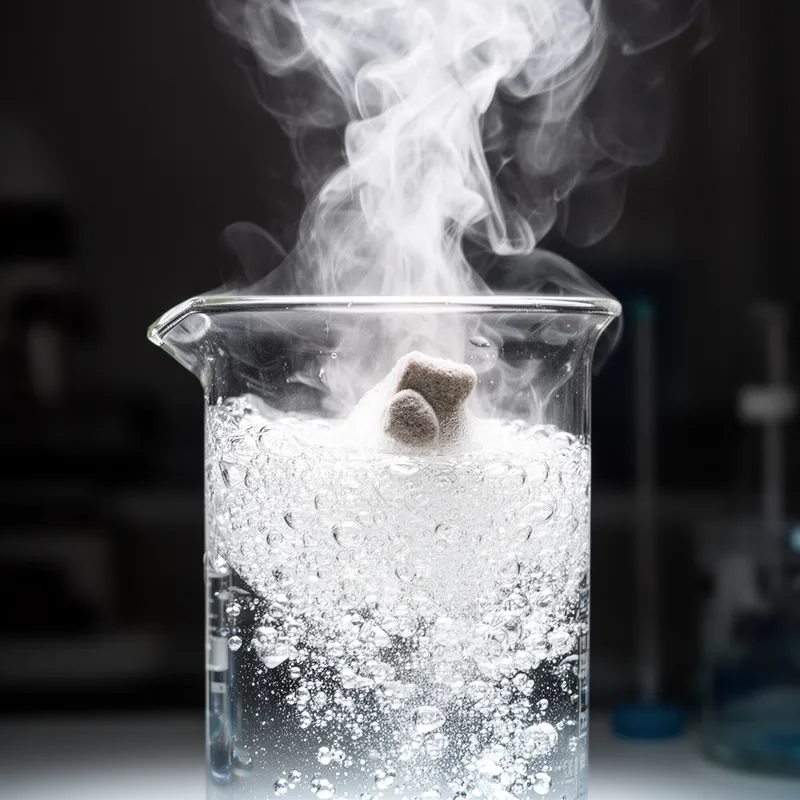
to react
 47
3.7
47
3.7

- verb
- /riˈækt/
- Specialized
- The linkage helps the immune system react and defend against the sugar-coated bacterium.
- react with oxygen
- react chemically
- react to form
Examples
-
In that way, they study how the gene would react to a particular drug.
Academic text (2008) -
If you mix vinegar and baking soda, they will react to create carbon dioxide bubbles.
-
When this gets too hot, it can react with air and release hydrogen gas.
-
Don't let the two substances react with each other.
-
And iodine can react with starch and this is blue.
-
When these two, these reactants react, they form hypoiodis acid.
-
That's how soft it is, and it reacts violently with water.
-
Nitrogen compounds also react with other air pollutants to form toxic ozone and particulate matter.
Academic text (2012) -
Critical brain cells were either overly sensitive or didn't react enough to neurotransmitters that modulate anger and aggression.
Fiction book (1998) -
Ozone corrodes metals, cracks certain rubber compounds, and reacts with nitric acid to form nitrogen dioxide.
Academic text (1993)
Antonyms

How Reactive
- Specialized
47
3.7

- Specialized
7
5.5
- Specialized
- US
197
3.7
Surface Forms
Morphology
Etymology
The scientific use of react uses the same parts re- 'again' and act 'do', so you can imagine two substances meeting and 'doing' something to each other. That's why when chemicals react they change or make new substances.