
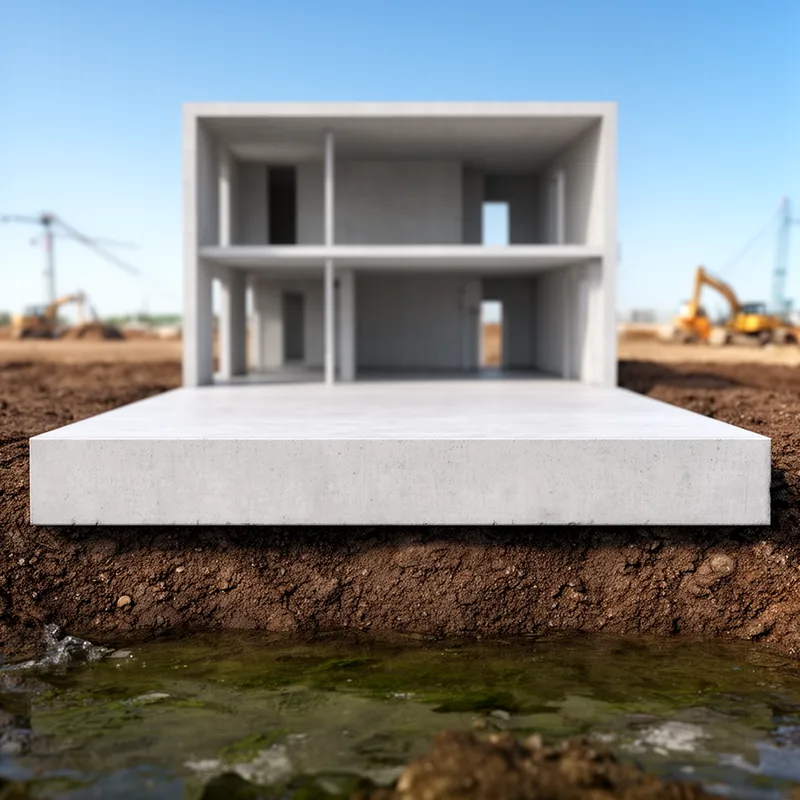
raft foundation
- noun
- /ræft faʊnˈdeɪʃən/
- Specialized
- The engineers decided to use a raft foundation due to the marshy ground on the construction site.
Examples
-
When soil conditions are poor, a raft foundation can prevent uneven settling of the structure.
-
A raft foundation helps distribute the weight of the building evenly over a large area.
-
The engineer designed a new raft foundation for the building.
-
Many raft foundations are used in construction on soft soil.
-
A raft foundation is essential for buildings constructed on weak soil to distribute their weight effectively.
-
The heavy machinery required a raft foundation to ensure stability on the unstable ground.
-
To prevent any damage from settling, the builders opted for a raft foundation for the new house.
Synonyms
 127
3.6
127
3.6

The lowest part of a building that supports and spreads its weight
 1
8.0
1
8.0
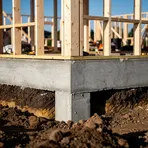
A large concrete base that supports a building on soft ground

 1
7.4
1
7.4
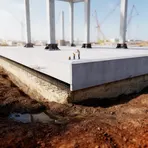
A thick concrete base that spreads a building's weight over soft ground
How Strong
- Specialized
14
6.8

- Specialized
127
3.6
- Specialized
- Specialized
6
5.7
Surface Forms
Morphology
The phrase is partly compositional—'raft' + 'foundation' signals a type of foundation and evokes the idea of a wide slab that 'spreads' loads—so there is a transparent link to the constituents. However, the precise sense (a large reinforced concrete slab used on soft ground) is technical and domain-specific, and an average B1 learner who only knows common senses of 'raft' (e.g. a floating platform) and 'foundation' may not infer the engineered meaning without exposure, making it only partially transparent.
Etymology
The term raft foundation comes from the image of a raft — a flat wooden platform that floats and spreads weight across water. A foundation is the base of a building, so a raft foundation is a wide flat base that 'spreads the weight' of the building over soft ground, helping it not to sink.