
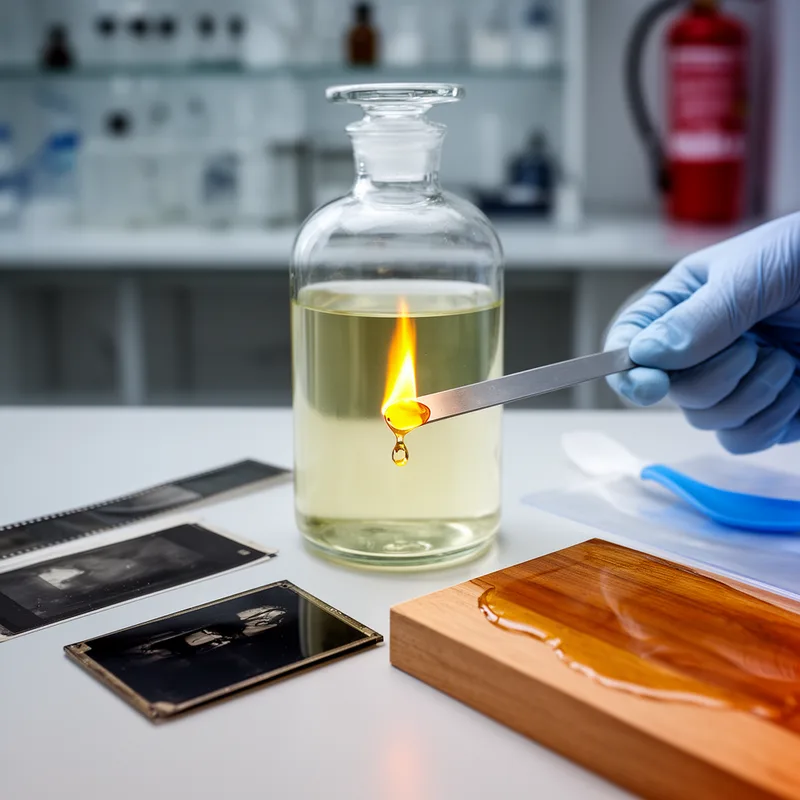
pyroxyline
- noun
- /ˌpaɪrəˈzɪlaɪn/
- Specialized
- Early photographic films were coated with pyroxyline to create a sensitive surface for image capture.
Examples
-
The factory stored barrels of pyroxyline, which made fire safety measures especially important.
-
Collodion made from pyroxyline was commonly used in 19th-century medical dressings.
-
The laboratory used pyroxyline in their experiments.
-
Many artists prefer pyroxyline for its quick-drying properties.
-
Collodion made from pyroxyline was commonly used in 19th-century medical dressings.
-
Early photographic films were coated with pyroxyline to create a sensitive surface for image capture.
-
The factory stored barrels of pyroxyline, which made fire safety measures especially important.
Synonyms
 4
8.6
4
8.6

A very flammable material made from chemicals with nitrogen and oxygen used in old movie film
 1
9.9
1
9.9
A very flammable chemical made from plant fiber used in old film, paint, and explosives


 1
9.9
1
9.9
A highly flammable material made from cotton and strong acid used in explosives and varnish
A very flammable chemical made from plant fibers used to make early plastics, film, and shiny coatings

A very flammable material made from plant fibers and a strong acid, used in lacquers, early photographic film, and explosives

A strong, light material made from cotton treated with acid used in films and explosives

A chemical from plant material that burns easily and is used to make smokeless powder
Surface Forms
Morphology
pyroxyline = pyro + xyl + ine
This is a learned classical formation from pyro- + xyl- + -ine, but the meaning 'nitrocellulose' is not recoverable for ordinary learners from the parts.
Etymology
The word pyroxyline comes from Greek parts pyro- meaning 'fire' and xylon meaning 'wood'. That image helps because pyroxyline is a very flammable treated form of cellulose, the substance found in wood and cotton, so the name is like 'fire-wood' and explains why it was used in collodion, plastics, and lacquers and why it needed careful storage.