
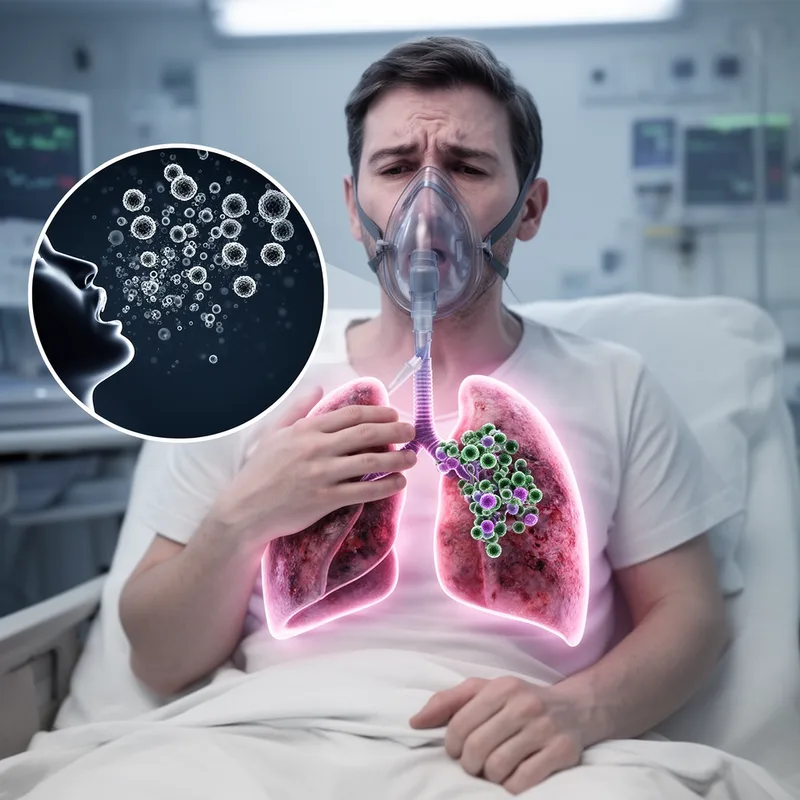
pulmonary anthrax
- noun
- /ˈpʌlməˌnɛri ˈænθræks/
- Specialized
- Symptoms like high fever and difficulty breathing are common with pulmonary anthrax infections.
Examples
-
Inhalation of spores can lead to severe respiratory distress in cases of pulmonary anthrax.
-
We have no effective vaccine that we can use to prevent a pulmonary anthrax attack from being completely successful.
Blog text (5) -
The doctor warned that pulmonary anthrax can develop rapidly after exposure to infected animals.
Synonyms

 80
6.9
80
6.9

A serious disease that mainly affects animals like cows and sheep and can also infect people
 1
8.2
1
8.2
A serious lung infection caused when tiny bacteria are breathed in, often deadly without quick treatment
A severe lung infection from breathing in anthrax spores that quickly becomes life threatening

A serious lung infection people get from germs in contaminated wool

A serious lung disease from dust in infected wool that may lead to severe difficulty breathing and heart failure

A serious lung infection caused by breathing dust with anthrax bacteria, often from work with wool

A serious lung infection from breathing in anthrax bacteria that can cause severe breathing problems and heart failure
Surface Forms
Morphology
The compound combines 'pulmonary' (relating to the lungs) with 'anthrax' (a specific disease), so its meaning—anthrax infection of the lungs—is directly and transparently derived from the constituents. Although medical, this adjective+noun composition is a regular, cross-linguistic naming pattern, so a B1 learner who knows both words would readily understand it.
Etymology
Pulmonary anthrax is a medical name for an infection of the 'lungs' by anthrax. The word pulmonary comes from an old word for 'lungs', so imagine tiny spores being 'breathed in' and attacking the lungs, and that's why it means anthrax picked up by breathing in the spores.