
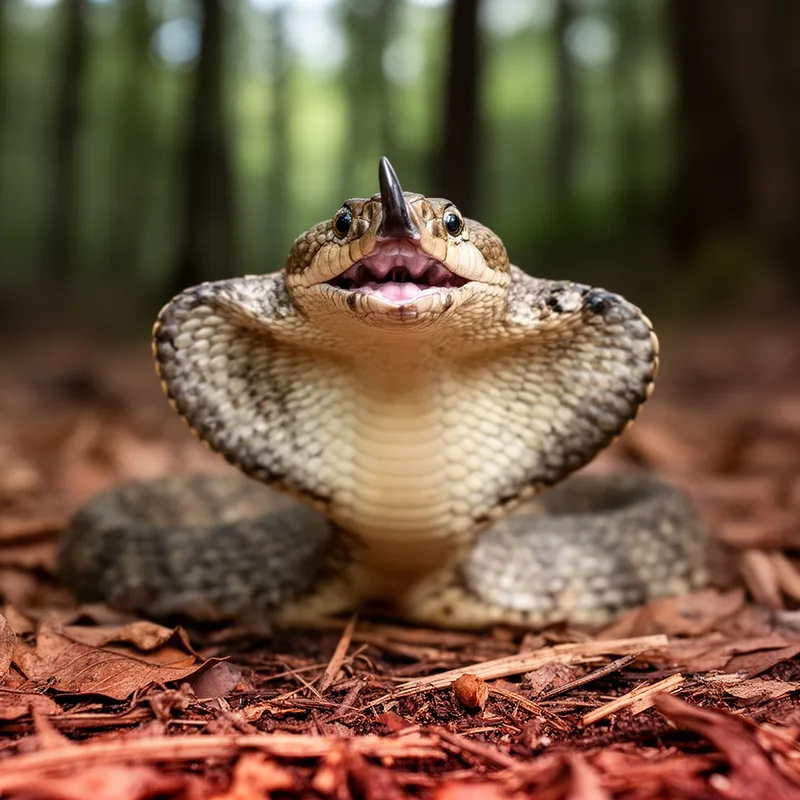
puff adder
- noun
- /pʌf ˈædər/
- US
- The puff adder will often inflate its body and hiss when it feels threatened.
Examples
-
Despite its alarming display, the puff adder is not venomous and rarely bites humans.
-
A puff adder can be recognized by its upturned nose.
-
Many people mistake the puff adder for a dangerous snake because of its defensive tactics.
-
The puff adder is often found in gardens.
-
Many people mistake the puff adder for a dangerous snake because of its defensive tactics.
-
Despite its alarming display, the puff adder is not venomous and rarely bites humans.
-
The puff adder will often inflate its body and hiss when it feels threatened.
Synonyms


 1
7.8
1
7.8
A small snake with an upturned nose that often plays dead and is usually harmless to people

A harmless North American snake with an upturned nose that spreads its head and plays dead when scared
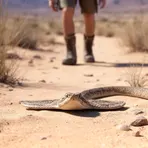
A harmless North American snake with an upturned nose that flattens its head and sometimes plays dead when scared
Surface Forms
Morphology
The compound is compositionally predictable: 'puff' (to swell or expand) combined with 'adder' (a snake) yields a snake that puffs up. A B1 learner who knows both words can infer the basic meaning (a snake characterized by puffing behavior), though finer details like venomous vs. harmless require extra knowledge.
Etymology
Puff adder for the North American snake is named for the way it puffs up, spreads its neck, or even plays dead to scare enemies, and adder means 'snake', so the name shows the dramatic display a usually harmless animal uses to protect itself.