
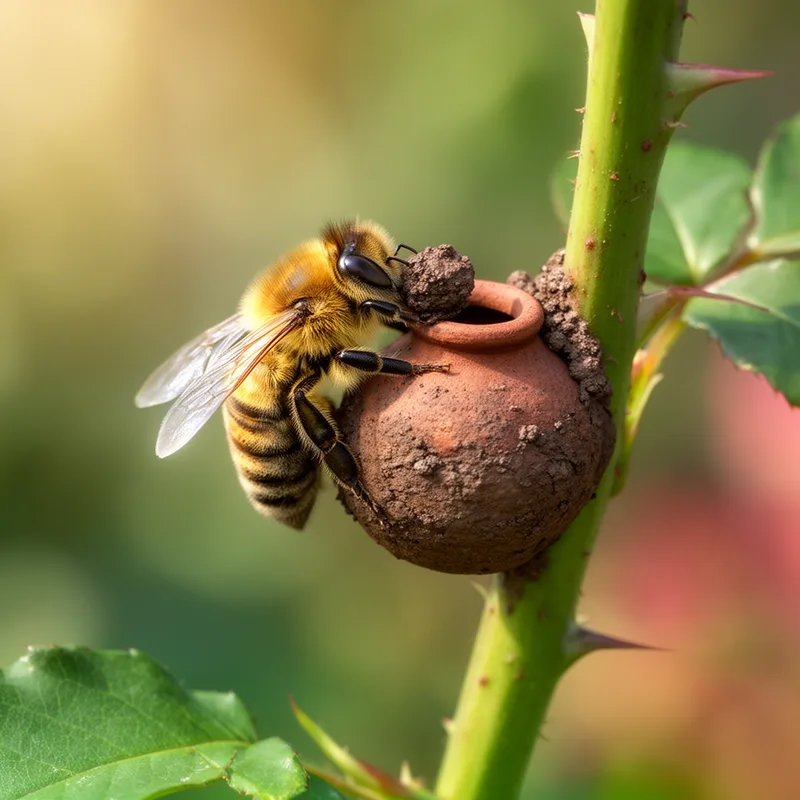
potter bee
- noun
- /ˈpɑːtər biː/
- Unlike honeybees, the potter bee works alone and prefers building nests with mud.
Examples
-
I spotted a potter bee carefully constructing its nest on the stem of a rose bush.
-
The garden wall had several potter bee nests attached to its sunlit surface.
-
I saw a potter bee building its nest in the garden.
-
The potter bees are known for their unique nesting habits.
-
I spotted a potter bee carefully constructing its nest from mud on the stem of a rose bush.
-
The garden wall had several potter bee nests made of mud attached to its sunlit surface.
-
Unlike honeybees, the potter bee builds its nest alone using pebbles and mud.
Synonyms

A bee that lives alone and builds nests from mud in holes
Surface Forms
Morphology
The compound 'potter bee' is directly interpretable as a bee characterized by potter-like behaviour — i.e., one that shapes or uses mud/pebbles like a potter. This follows regular English noun+noun compounding (modifier indicates a salient trait) and would be understandable to a B1 learner who knows 'potter' and 'bee'.
Etymology
Potter bee comes from the way the insect builds its home: the bee acts like a potter, shaping small pot-like cells from 'mud' and sticking them to plant stems. That's why the name means a 'solitary' bee that makes a 'nest' of mud.

