

pond bald cypress
- noun
- /pɒnd bɔld ˈsaɪprəs/
- US
- In the swamp, the buttressed base of the pond bald cypress helps it withstand flooding.
Examples
-
The pond bald cypress thrives in the saturated soils of southeastern wetlands.
-
After the flood, the roots of the pond bald cypress were clearly visible above the waterline.
-
Large swathes of pond bald cypress line the edges of the Okefenokee Swamp.
-
The pond bald cypress thrives in wetland areas.
-
Look at that pond bald cypress!
-
The pond bald cypress is an impressive tree commonly found in the wetlands of the southeastern United States.
-
Birds often nest high in the branches of the pond bald cypress during the spring months.
Synonyms
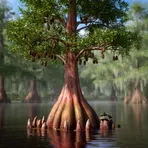
A tree that has cones and a swollen base that grows in southern US swamps

A tree in the cypress family that loses its leaves and grows near ponds in the southeastern United States
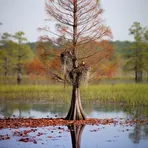
A tree that loses its leaves and grows in wet places in the southern United States
Surface Forms
Morphology
A learner who knows 'pond' and 'cypress' can reasonably infer this refers to a type of cypress associated with ponds (i.e., a tree or its wood from wetland areas), so much of the meaning is compositional. However, 'bald' here is a conventional part of the species name (not literally 'hairless') and the specific taxonomic/wood sense and nuances are not fully predictable from the parts, making the expression only partially transparent.
Etymology
Pond bald cypress gets its name from how the tree lives: it often stands in ponds and very wet ground, and it loses its leaves in winter so it can look 'bald'. That's why the name points to this swamp tree with a wide, swollen base that stands in water.

