
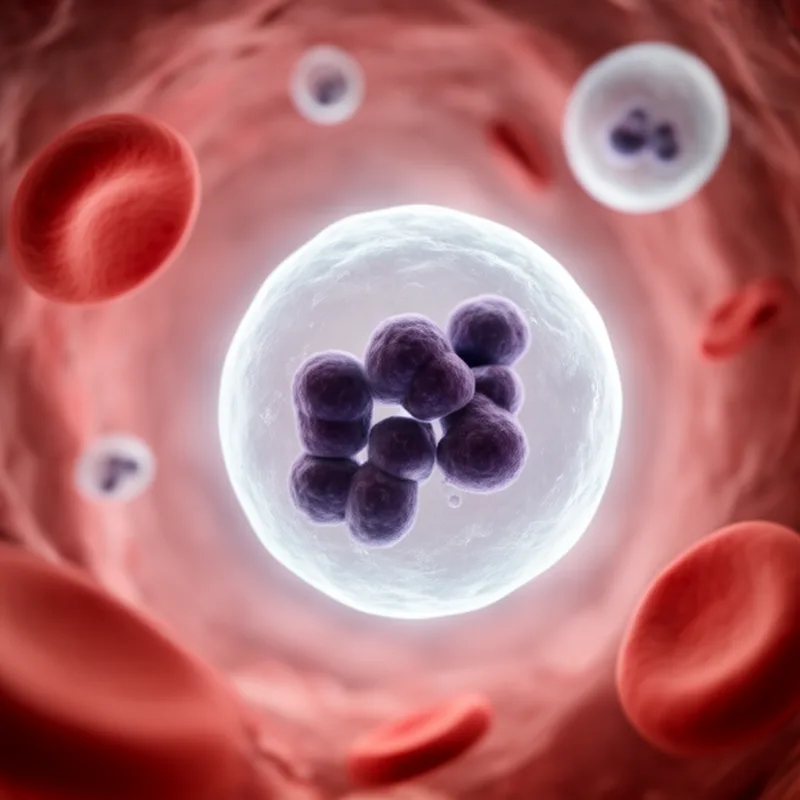
polymorphonuclear
- adjective
- /ˌpɒliˌmɔrfəˈnukliər/
- Specialized
- A wave of CD8 T cells follows, with increasing numbers of macrophages, and if a sufficiently high dose of antigen is used for "immunisation," a striking polymorphonuclear leucocyte infiltrate may be observed.
- polymorphonuclear leukocytes
- polymorphonuclear leucocyte
- polymorphonuclear cells
Examples
-
Cerebrospinal fluid findings, suggestive but not pathognomonic, include polymorphonuclear pleocytosis and increased protein concentration with normal glucose levels.
Academic text (1998) -
Researchers found that elevated levels of polymorphonuclear leukocytes are often present during bacterial infections.
-
The connective tissue layer of the treated TMs had been invaded by abundant inflammatory cells, primarily polymorphonuclear leukocytes.
Academic text (2005) -
Other angiogenic factors were also involved in the angiogenic action, and inclusion of polymorphonuclear leucocytes attenuated angiogenic action by releasing neutrophil elastase.
Academic text (2002) -
In a healthy immune response, polymorphonuclear leukocytes like neutrophils play a crucial role in fighting infections.
-
The laboratory analyzed samples of polymorphonuclear cells to better understand their function in the immune system.
Surface Forms
Morphology
Etymology
Polymorphonuclear comes from three parts: poly- 'many', morph- 'shape', and nuclear 'of the nucleus'. So it describes something like a cell whose nucleus has many parts or lobes, which is why doctors use the word for certain white blood cells.

