
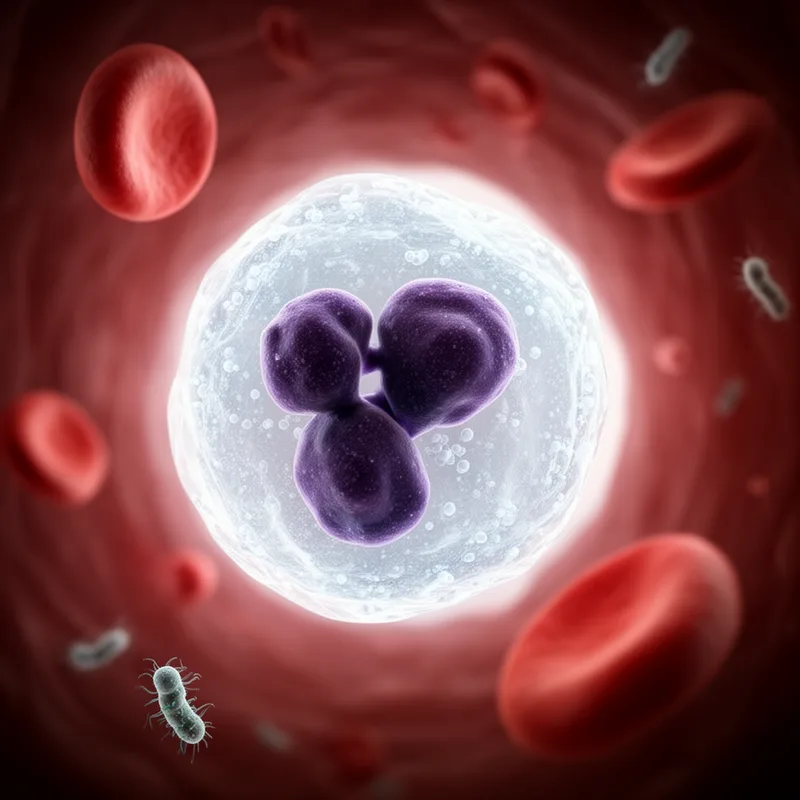
polymorphonuclear
- noun
- /ˌpɒliˌmɔrfəˈnukliər/
- Specialized
- *IHC, immunohistochemical; +, positive; -, negative; PMN, polymorphonuclear cells; umbilical, chorioamnionitis; HT, hyperthyroidism. # Figure 1
Examples
-
The polymorphonuclear leukocytes play a crucial role in the body's immune response by fighting infections.
-
And if we collect white cells, then we can also separate them into polymorphonuclears or mononuclears.
-
Reference values: protein, 15-45 mg/L; glucose, 50-80 mg/L; leukocytes, 0-5 cells/L; polymorphonuclear neutrophils, 0%.
Academic text (2015) -
In a blood sample, the number of polymorphonuclear cells can indicate the presence of inflammation.
-
Doctors often analyze polymorphonuclear neutrophils to assess a patient's immune function.
Synonyms
 1
7.7
1
7.7

A white blood cell that eats and destroys bacteria and other germs


 1
8.9
1
8.9
A type of white blood cell with small particles inside that helps fight infection
 1
8.6
1
8.6
A white blood cell that eats and digests small germs or particles

A white blood cell that eats and kills bacteria
Surface Forms
Etymology
Polymorphonuclear comes from poly- 'many', morph- 'shape', and nuclear 'of the nucleus', so it names a white blood cell whose nucleus is divided into several lobes.