
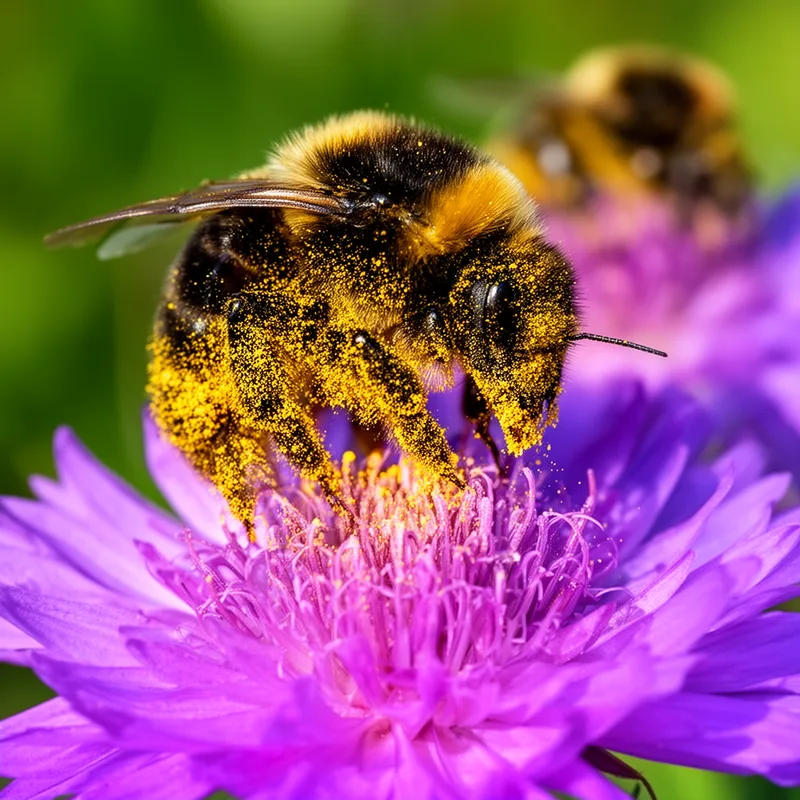
to pollinate
 12
4.2
12
4.2

- verb
- /ˈpɒləˌneɪt/
- Bees are essential to pollinate flowers, enabling them to produce fruits and seeds.
- pollinate plants
- pollinate the flower
- pollinate blueberries
Loading YouTube…
Watch on YouTubeBut whoever said it, you know, really understood the role of these these pollinating species in the human survival.
- But whoever said it, you know, really understood the role of these these pollinating species in the human survival.
- And there's been a lot of selection on honey bees about that transition because you want the honey bees out pollinating the crops.
- But what you do need to do is you do need to have it pollinated some, some way.
Examples
-
It was easy to pollinate in a controlled way.
-
And without those little guys, like, what's gonna pollinate all the crops we have left?
-
We're the only ones who make honey, pollinate flowers and dress like this.
-
In America, they pollinate six billion dollars' worth of crops!
-
I pollinate plants that make fruits, vegetables, and nuts.
-
Used commercially for several decades in Japan to pollinate apples, it's now in the United States.
Academic text (1994) -
Bees, beetles, and moths move to pollinate and then mostly fly away.
Academic text (2017) -
With a small paintbrush, Finn pollinates the emasculated flowers with the pollen.
Academic text (2003) -
This is an orchid that goes to very great lengths to induce insects and in some cases bats to pollinate it to encourage it to make more orchids.
-
In crossing two clones, geneticist Richard Novy pollinates a potato flower with pollen from another parent.
Academic text (2000)
Synonyms
 34
4.0
34
4.0
To make an egg or plant cell start growing by joining it with a male cell

To move pollen from the male part of a flower to the female part so the plant makes seeds

To make a living thing able to have babies or produce fruit
Phrasal Verbs

Bring ideas from different areas together to make new products or solutions
Surface Forms
Morphology
Etymology
The word pollinate comes from the Latin word pollen, which means 'fine powder', like the yellow dust you see on flowers. So to pollinate is to move that fine powder from one flower to another so the plant can make seeds, which is why bees and wind are important pollinators.