
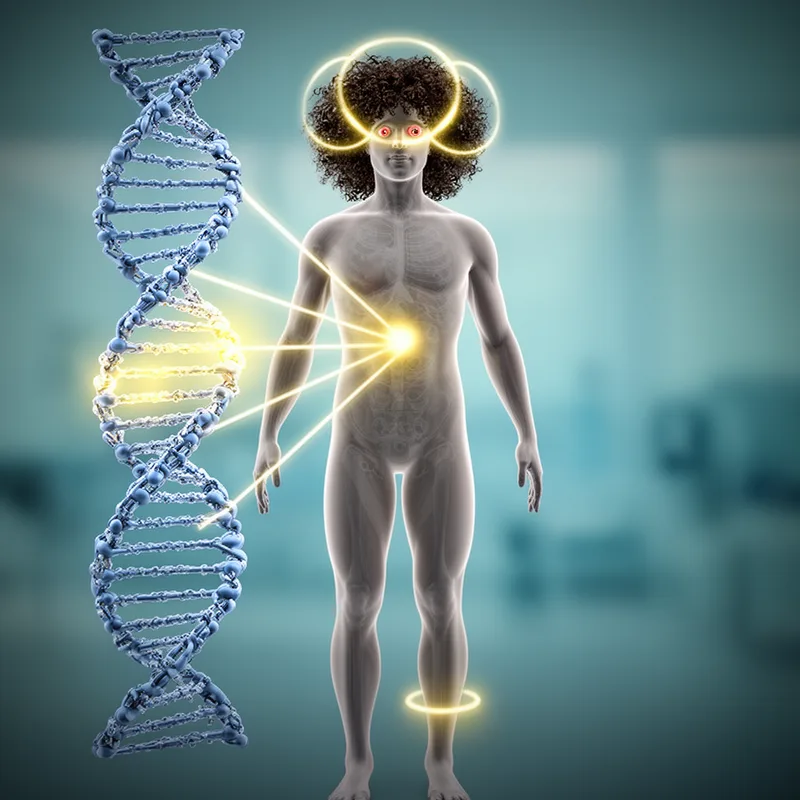
pleiotropism
- noun
- /ˌpliːəˈtrɒpɪzəm/
- Specialized
- Researchers discovered that pleiotropism explains why one gene can influence multiple, seemingly unrelated traits.
Examples
-
Understanding pleiotropism is important for studying genetic disorders that affect multiple body systems.
-
The concept of pleiotropism helps scientists link different traits to a single gene.
-
Researchers discovered that pleiotropism explains why one mutation can cause several symptoms.
-
What is pleiotropism?
-
The term pleiotropism describes genetic influences.
-
Understanding pleiotropism is crucial for analyzing genetic disorders that impact several bodily functions.
-
The concept of pleiotropism illustrates how a single gene can lead to various traits in an organism.
Synonyms


 1
9.9
A single gene that affects two or more different traits in a living thing
Surface Forms
Morphology
Etymology
Pleiotropism comes from Greek parts pleio- meaning 'more' and -tropism meaning 'turning' or 'a response', as in phototropism where a plant turns to light. So pleiotropism is a simple way to remember that one gene can cause 'more' than one effect or trait.