
pleiotropy


 1
9.9
- noun
- /ˈpliːəˌtrɒpi/
- Specialized
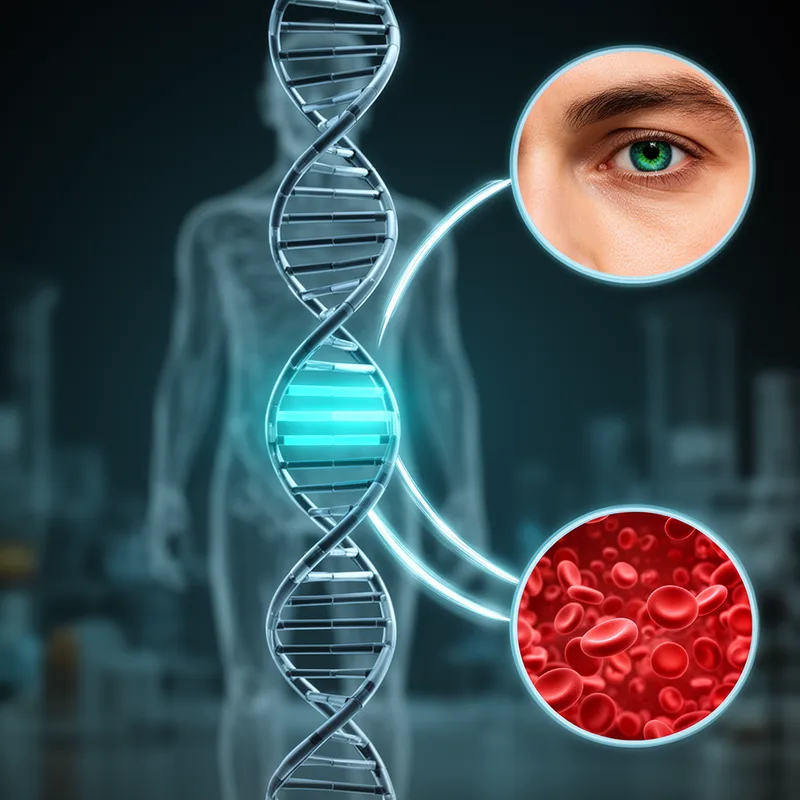
- The concept of pleiotropy explains how one gene can affect unrelated characteristics, such as flower color and leaf shape.
Loading YouTube…
Watch on YouTubeAnd we call this this issue antagonistic pleiotropy.
- And we call this this issue antagonistic pleiotropy.
Examples
-
In genetics, pleiotropy occurs when a single gene influences traits like height and color in an organism.
-
So pleiotropy just means you have different characteristics that are influenced by the same gene or set of genes.
-
His theory of pleiotropy posited that reproduction and aging were genetically linked.
Academic text (2002) -
Correlation between two characters in an ordinary population should be the composite of the effects of selection, gene linkage, and pleiotropy (Sakai and Suzuki, 1964).
Academic text (2013) -
Research on pleiotropy shows how variations in a single gene can lead to multiple physical traits in an organism.
Synonyms
One gene causes two or more different traits in a living thing
Surface Forms
Morphology
pleiotropy = pleiotropic (opaque) = pleio + trop + y
The formation uses Greek combining forms (pleio- + trop-) and an academic noun ending, which is not transparent to average learners.
Etymology
Pleiotropy comes from Greek parts pleio- meaning 'more' and -tropy from tropos meaning 'turn' or 'way'. So, pleiotropy is a useful image: one gene can work in 'many ways' and so cause several different traits.