

placentation
- noun
- /pləˈsɛnˌteɪʃən/
- Specialized
- Marginal placentation is commonly found in pea and bean plants.
Examples
-
The type of placentation can help botanists identify different species of flowering plants.
-
The study focused on how different forms of placentation influence seed development.
-
The placentation of this flower is quite unique.
-
Different species exhibit various types of placentation.
-
Marginal placentation is commonly found in pea and bean plants.
-
The type of placentation can help botanists identify different species of flowering plants.
-
Different species exhibit various types of placentation in their ovary structures.
Compounds

- Specialized
One or a few ovules grow at the base of the ovary in some flowers

- Specialized
A way seeds attach inside a flower's several-chambered ovary along a central column

- Specialized
A way a flower ovary holds the parts that make seeds on a central column without inner walls

- Specialized
A flower part where small future seeds attach to thin flat plates inside a joined seed chamber

- Specialized
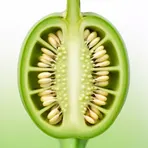
Seeds attach in a single row along one side of a pod, like in peas

- Specialized
Seeds grow on the inner wall of a flower's ovary, not on the central axis

- Specialized
A way the parts that become seeds attach to the inner wall of a plant ovary
Surface Forms
Morphology
Etymology
Placentation also comes from Latin placenta ('flat cake'), a useful image for botanists who thought of a flat plate that holds things. So placentation in plants means how the seeds or ovules are arranged and held inside the ovary.

