
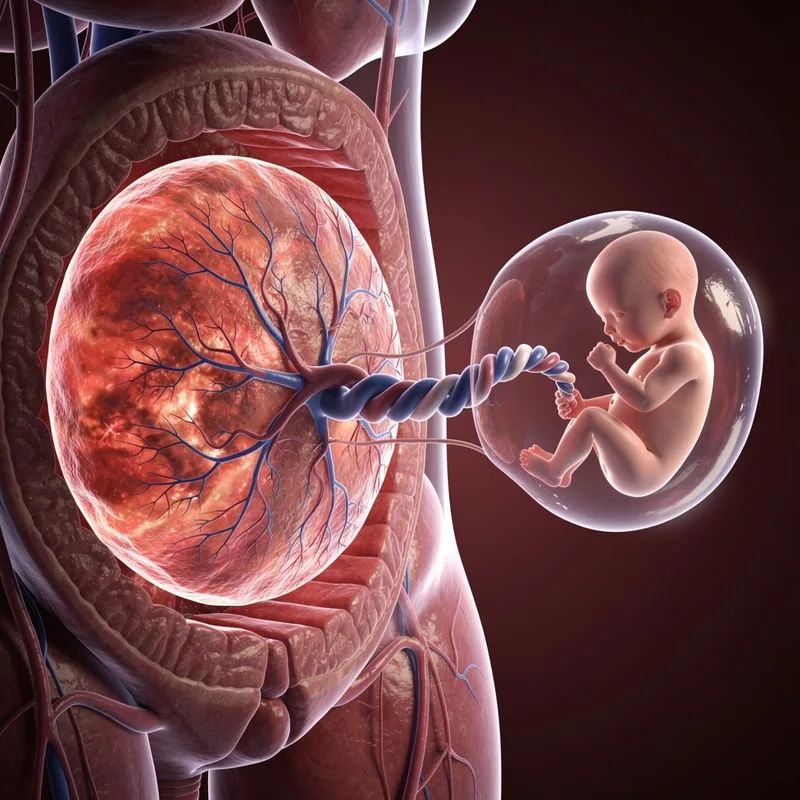
placenta
 26
5.6
26
5.6

- noun
- /pləˈsɛntə/
- Specialized
- After the baby was delivered, the doctor examined the placenta for any abnormalities.
- donate placenta
- cross the placenta
- umbilical cord and placenta
Loading YouTube…
Watch on YouTubeThey have been found in the human placenta.
- They have been found in the human placenta.
- Like there's no place for a placenta after the baby's born except in the trash.
- Oh my God, I had no idea how bad like pushing out the placenta is.
- Alan Flake, who's a surgeon, presented his work on the artificial placenta, which referred to as extend.
- I've had midwives ring me up who see the clots in the placentas and the babies are born early and they're born sick.
- So it gets into our central nervous system and can wreak havoc, can also go through the placenta.
- So for all nutrition and for oxygen and the, the placenta is a marvellous tissue and a lot goes on in the placenta, but the blood doesn't mix right.
- Our daughter Caroline was a preemie and Juliet had placenta previa.
- What do you do with this pool of placenta blood mess?
- Number one, we're the largest Bank of placentas on the planet.
- Like these days they're actually recommending that you like save the placenta or I think it's a placenta.
Examples
-
I was attending a birth, and the placenta was late in coming.
Fiction book (1995) -
The fetus accounts for 27% of total weight gained, amniotic fluid for 6%, and the placenta for 5%.
Academic text (2012) -
The placenta was late in coming.
-
The woman was held and supported until the placenta was delivered.
Academic text (2004) -
And yet this organ, this placenta is the vehicle of life.
-
We keep the cord and placenta attached until it falls away naturally.
-
Couple more pushes and we get the placenta, okay?
-
Available studies showed that Pb crosses the placenta but does not accumulate.
Academic text (2012) -
Our daughter Caroline was a preemie and Juliet had placenta previa.
-
The placenta provides essential nutrients to the developing fetus during pregnancy.
Compounds
- Specialized
2
7.1
A pregnancy condition where the placenta sits low and can cause heavy bleeding, often needing a C-section

- Specialized
A sea shellfish with a large thin, flat clear shell called the windowpane oyster
- Specialized
Thin clear sheets made from the windowpane oyster shell for decoration
Surface Forms
Etymology
Placenta comes from Latin and Greek words meaning 'flat cake', from Greek plakous, and it even shares the same root as plate meaning 'flat', because the organ is flat and round like a cake. So, the name fits the organ that lies on the womb and gives food and oxygen to the baby.