

pilot blacksnake
- noun
- /ˈpaɪlət ˈblæksneɪk/
- US
- The pilot blacksnake is known for its glossy black scales and docile nature.
Examples
-
Farmers often welcome a pilot blacksnake in their barns to help control rodents.
-
The pilot blacksnake, with its sleek appearance, is often found climbing trees in search of birds or their eggs.
-
A pilot blacksnake can grow up to eight feet long, making it one of the longest snakes in North America.
-
The pilot blacksnake is often mistaken for a rattlesnake.
-
Many people fear the pilot blacksnake because of its color.
-
Farmers appreciate the presence of a pilot blacksnake in their barns, as it effectively keeps the rodent population in check.
-
Known for its non-venomous nature, the pilot blacksnake is a common sight in North America's forests and fields.
Synonyms

 1
5.3
1
5.3

A snake that is not poisonous and eats rats and mice
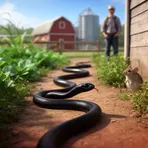

 1
7.4
1
7.4
A large not dangerous black snake found in North America, like a racer or rat snake
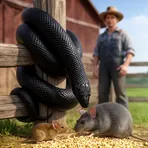
A large shiny black snake from North America that is not venomous and eats rats and mice
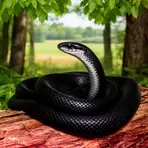
A large not venomous black snake that lives in eastern North America and is often called the black rat snake

A large shiny black snake found in North American mountains that is harmless to people

A large harmless North American snake that eats birds and eggs
Surface Forms
Morphology
pilot + blacksnake
A learner who knows 'black' + 'snake' will readily infer this refers to a kind of black snake, so the basic category (a black/non-venomous snake) is transparent. However, the modifier 'pilot' does not transparently add predictable semantic content (it functions as a species/vernacular label rather than a compositional descriptor), so the full, species-specific meaning is not fully derivable from the parts.
Etymology
Pilot blacksnake may come from farmers who called this large blacksnake a pilot because it moved through barns and seemed to 'guide' away rats and mice. So the name ties the snake's habit of helping in barns to its dark color and to the harmless animal we know today.