

pilomotor reflex


 1
7.7
1
7.7
- noun
- /ˈpɪloʊˌmoʊtər ˈriːflɛks/
- Specialized
- When frightened, many animals display a visible pilomotor reflex as their fur stands on end.
Examples
-
The pilomotor reflex can occur when you feel cold.
-
When scared, the pilomotor reflex makes your hair stand on end.
-
Skin irritation may also activate the pilomotor reflex, leading to noticeable goosebumps.
-
The pilomotor reflex can be triggered by a sudden chill or a strong emotional response.
-
When she felt a sudden chill, her pilomotor reflex caused the hairs on her arms to stand up.
-
The pilomotor reflex triggered an automatic reaction, making his skin prickle with goosebumps during the scary movie.
-
Her pilomotor reflex kicked in when she heard the loud noise, causing her to shiver with fear.
Synonyms
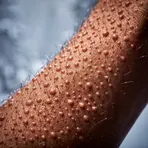 38
3.9
38
3.9
A small raised spot on the skin when someone feels cold, scared, or excited
 3
3.0
3
3.0
A small raised spot on your skin when you feel cold, scared, or excited
 2
3.7
2
3.7
A small raised bump on the skin that appears when you feel cold, afraid, or have strong feelings
 1
7.8
1
7.8
Small bumps on your skin when you feel cold, afraid, or excited
 1
4.1
1
4.1
Small raised bumps on the skin when you are cold or scared

Small bumps appear on the skin when hairs stand up from cold or fear
Surface Forms
Morphology
The meaning is directly compositional: 'pilomotor' denotes the hair-erecting (pilo-) motor action and 'reflex' denotes an automatic bodily response, so together they straightforwardly yield a reflex that causes hair erection. Although the term is technical, a learner who knows both constituent meanings can derive the MWE's meaning without additional idiomatic knowledge.
Etymology
Pilomotor reflex comes from two parts: pilo- meaning 'hair' and -motor meaning 'move'. It names the quick, automatic reaction that makes hairs stand up—like goosebumps when you are cold or scared—so the words literally point to 'hair' that moves.