

to picket
 13
4.8
13
4.8

- verb
- /ˈpɪkɪt/
- Workers decided to picket outside the factory to demand better wages and working conditions.
Loading YouTube…
Watch on YouTubeAnd what they first started was protesting picketing whenever a farmer or a contractor treated workers badly.
- And what they first started was protesting picketing whenever a farmer or a contractor treated workers badly.
- But what I did was I would go on these picketing the picket line, and I would tag the older writers.
Examples
-
The collegians raised funds, gave speeches, picketed, and observed arrests in an effort to protect the strikers from police brutality.
Academic text (1994) -
A busload of individuals picketed in front of a PMG clinic.
Academic text (2001) -
- Is he likely to picket my office?
-
To picket the big, bad chain store...
-
You have every right to picket, but it's gotta be outside the main gate.
-
Chicago public school teachers hit the streets to picket Monday during their first strike since 1987.
Blog text (15) -
A handful of protesters picket the entrance carrying signs.
Fiction book (1997) -
In support of the union, other unions working at Lindenwood picketed alongside them.
Blog text (31) -
Hundreds of women picketed the shops, and an estimated 2,000 participated in the boycott.
Academic text (1996) -
Along with others, we marched, picketed, wrote letters and articles, talked to groups, and held rallies.
Academic text (2009)
Synonyms
 578
2.5
578
2.5
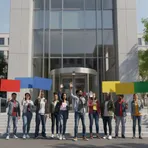
A public gathering of people who show strong disagreement, like a march
 1
5.0
1
5.0
To stand or march outside a building to show you are against something
Phrasal Verbs

Compounds
 27
4.2
27
4.2
A line of workers outside a workplace during a strike who stand to protest and stop others entering
 23
2.0
23
2.0
A row of upright wooden or metal boards with spaces that mark the edge of a yard



How Active
26
4.9
 74
3.2
283
3.2
13
4.8
133
3.2
619
2.4
74
3.2
283
3.2
13
4.8
133
3.2
619
2.4
Surface Forms
Etymology
To picket as a verb meaning to protest comes from the people called pickets who stood at the entrance of a workplace; the action was named after those people. That's why to picket is to stand or march outside a place of work to show disagreement.