

to demonstrate
 74
3.2
74
3.2

- verb
- /ˈdɛmənˌstreɪt/
- Although only supporters are allowed near the president for security reasons, there are, in fact, many protesters demonstrating against his policies here today.
- students demonstrated
- people demonstrated
- thousands demonstrated
Loading YouTube…
Watch on YouTubeYou don't realize that college campuses erupted with the kids demonstrating for Hamas.
- You don't realize that college campuses erupted with the kids demonstrating for Hamas.
- And so let's, let's protest on campus to, to demonstrate.
- Now you may wonder why all these people are rallying and demonstrating.
- So I have a lot of sympathy with some of the aims of the people who were demonstrating in some ways.
- And he said that people should go and demonstrate their disapproval of Mr Harewood's choice of employment.
- Sometimes we demonstrate during the day against the very same things that we delight at night.
- And believe me, the fact that people are arguing and demonstrating in the streets and protesting is just is the best proof of that.
Examples
-
Those who demonstrate are only complaining about their government.
-
Sometimes we demonstrate during the day against the very same things that we delight at night.
-
We will demonstrate if necessary.''
-
I had started demonstrating because of the Vietnam War and then I met very strong women connected to that.
-
But we weren't demonstrating for a court.
-
The extent of the right to demonstrate against these wrongs should be determined accordingly.
Academic text (1994) -
4 September 1989: Twelve hundred people demonstrate in Leipzig during the city's fall trade fair.
Academic text (1990) -
The secular nationalist Kifaya has also demonstrated and clashed with police.
Academic text (2008) -
Thousands of students are planning to demonstrate at the rally downtown this Saturday.
-
Activists have organized a march to demonstrate against climate change policies in the city.
Synonyms
 389
1.0
389
1.0
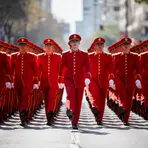
To walk in a steady, organized way with other people
 283
3.2
283
3.2
To show strong disagreement in public, often by joining a march or strike
 220
3.4
220
3.4
To say your opinion or feelings openly even when it is difficult
 49
4.1
49
4.1
To go outside in large numbers to protest
 44
4.1
44
4.1
Publicly say you are strongly against something or someone
 40
3.6
40
3.6
To show in public that you strongly disagree with something
 23
4.6
23
4.6
Publicly say you strongly agree or disagree with something
 16
6.1
16
6.1
Go out into public to take part in activities like protesting or selling things
 15
4.2
15
4.2
To say in public that you do not support something
 11
5.6
11
5.6
To try to make political or social change
 4
6.8
4
6.8
Complain loudly in public to get attention
 1
5.0
1
5.0
To stand or march outside a building to show you are against something
 1
8.5
1
8.5
To speak strongly to show you disagree

To express a complaint or concern, often publicly
How Active

Surface Forms
Morphology
demonstrate = demonstration (semi-transparent) = de + monstr + ate
The protest meaning comes via the noun 'demonstration' (a public protest); this relationship is lexical and somewhat idiomatic, so learners cannot infer the protest sense from the Latin morphemes alone.
Etymology
Demonstrate also comes from de- 'completely' and monstrare 'to show', and this idea of 'showing' became a public 'show' of opinion. That's why to demonstrate can mean to take part in a public protest and show your views to others.