
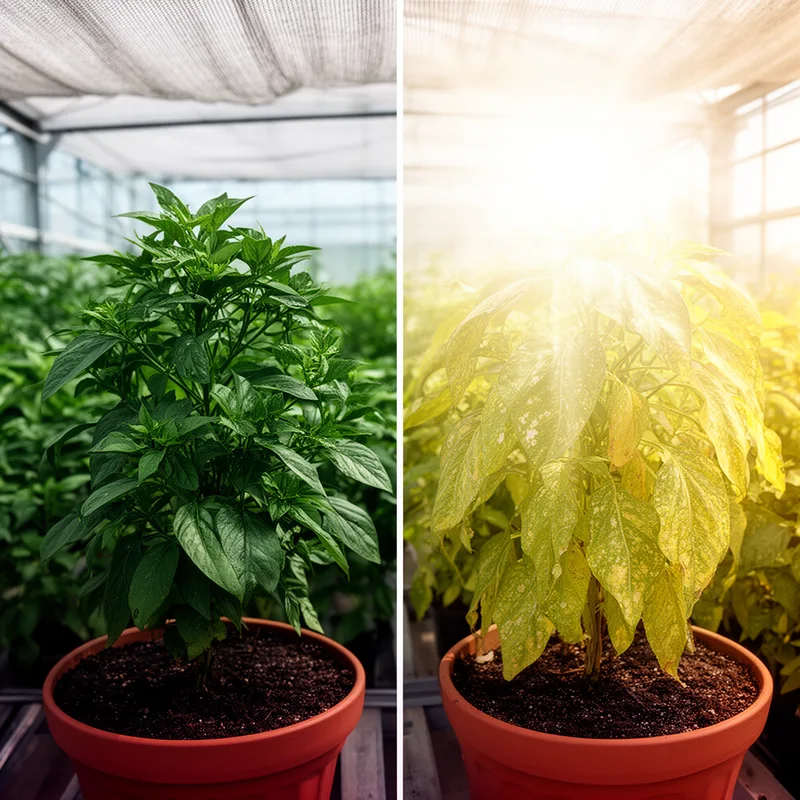
photoinhibition


 1
9.6
- noun
- /ˌfoʊtoʊɪnˈhɪbɪʃən/
- Specialized
- In the present study, the diurnal changes in gas exchange and chlorophyll fluorescence were examined in leaves of ginkgo in order to describe their midday photoinhibition and photoprotection under field conditions.
Examples
-
Photoinhibition occurs when excessive light reduces a plant's ability to photoinhibition effectively.
-
This damage, referred to as photoinhibition, causes a reduction in the efficiency of photosynthetic utilization of light (Powles 1984).
Academic text (1992) -
There are differences between species of canopy trees in water stress and in the potential mechanisms of protection from photoinhibition.
Academic text (1992) -
Photoinhibition can be analyzed through measurements of leaf fluorescence (Figure 4).
Academic text (1992) -
Regardless of the degree of photoinhibition and extent of photoprotection through pigment production, all three species showed recovery from stress by early evening (Figure 5b).
Academic text (1992) -
As light increased in the canopy over the day (Figure 4a), so did the water stress (Figure 4b) and the extent of photoinhibition (Figures 4c, d) for all three species.
Academic text (1992) -
Light-use efficiency is driven by the most limiting of a number of environmental stress factors that reduce plants' photosynthetic capacity; these include short-term stressors, such as photoinhibition, as well as longer-term stressors, such as soil water and temperature.
Academic text (2010) -
Photoinhibition in the leaves of Anacardium excelsum, Didymopanax morototoni, and Luehea seemannii was measured directly in the upper canopy (20-25 m above the ground).
Academic text (1992) -
High levels of sunlight can lead to photoinhibition, making it challenging for plants to use light for photosynthesis.
-
During periods of intense light, photoinhibition may cause a noticeable decrease in the photosynthetic activity of plants.
Surface Forms
Morphology
photoinhibition = inhibition (semi-transparent) = photo + inhibit + ion
The term is built compositionally from photo- 'light' plus inhibition, but its use as a specialized biological term makes it slightly less immediately accessible.
Etymology
Photoinhibition comes from photo- meaning 'light', as in photograph, and inhibit meaning 'to hold back'. So it describes how too much light can 'hold back' a plant's ability to make food by photosynthesis.