
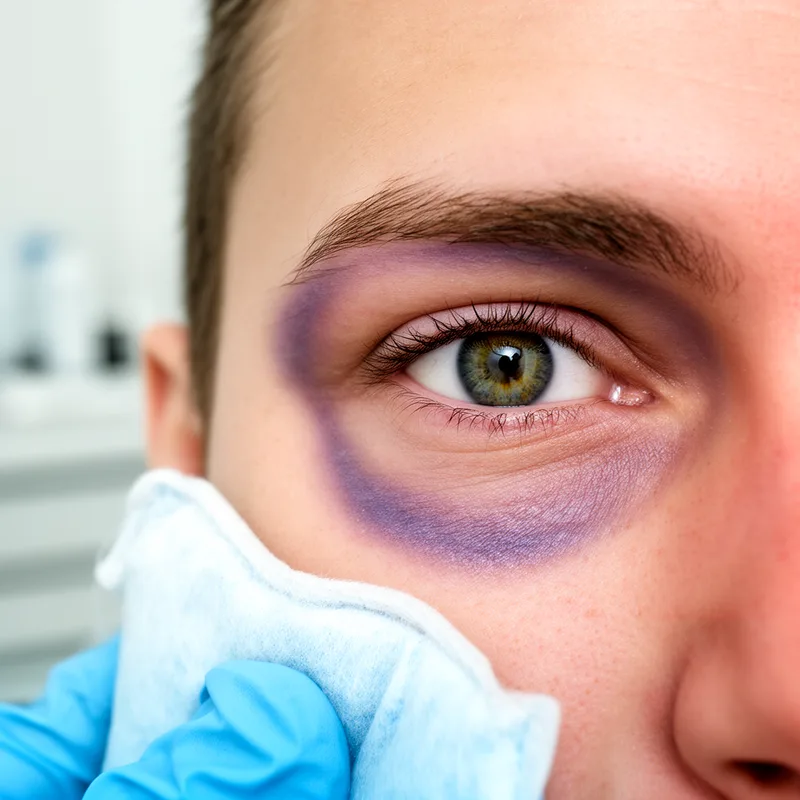
periorbital
 1
8.0
1
8.0

- adjective
- /ˌpɛriˈɔrbɪtəl/
- Specialized
- The doctor examined the patient's periorbital area for signs of infection.
- periorbital edema
- periorbital cellulitis
- periorbital ecchymosis
Examples
-
The most common preseptal infection is periorbital cellulitis (stage I), which usually manifests as upper eyelid swelling; there are no extraocular or visual changes.
Academic text (2002) -
CT is usually unnecessary in patients with preseptal infections (i.e., periorbital or orbital cellulitis).
Academic text (2002) -
The echodensity is the result of the high water content of the inflamed periorbital fat.
Academic text (2001) -
At presentation, subcutaneous air distorts the patient's right periorbital area.
Academic text (2006) -
The medial canthal region is the second most common location for periorbital BCCs (5).
Academic text (2015) -
His postoperative course was complicated by subcutaneous emphysema and edema extending from the neck to the right periorbital area.
Academic text (2005) -
Periorbital swelling and erythema of the left infraorbital area and cheek were also observed.
Academic text (2001) -
In the early postoperative period, periorbital ecchymosis and edema were observed but regressed and faded in eight to ten days.
Academic text (2015) -
He complained of a 5-day history of progressive nasal obstruction with 3 days of unilateral periorbital edema.
Academic text (2009) -
Physical examination revealed left-sided proptosis with periorbital edema, erythema, and a left-sided cranial nerve VI palsy.
Academic text (2009)
Synonyms
Around the eye
How Ocular

Surface Forms
Morphology
Etymology
Periorbital comes from the parts peri- meaning 'around' and orbit meaning 'eye socket', the same 'around' you see in perimeter and the same 'orbit' used for the round space of the eye. So periorbital means 'around the eye socket', which is why doctors use it for swelling, bruises, or pain near the eye.