
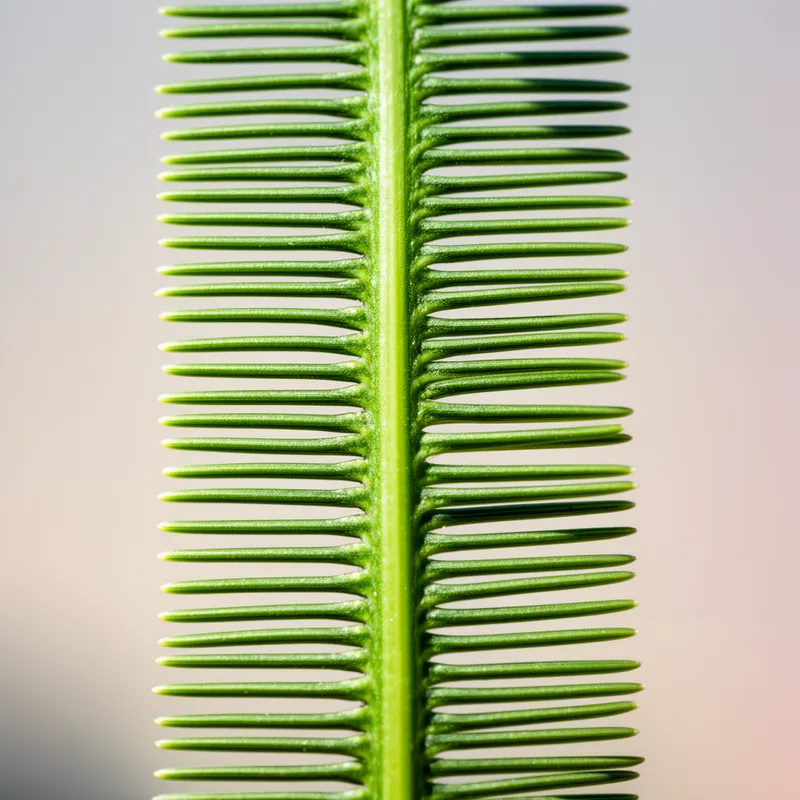
pectinate
9.9
Having thin parallel parts like the teeth of a comb
- adjective
- /ˈpɛktɪneɪt/
- Specialized
:
pectinado
- Microscope analysis revealed the feather had a distinctly pectinate edge.
Examples
-
Many bird species have pectinate claws on their middle toes for grooming.
-
The pectinate leaves of the plant resemble a comb.
-
The fern leaves are pectinate, resembling the teeth of a comb.
-
Look at that pectinate structure on the insect's antenna!
-
The pectinate leaf margins of the fern resembled the teeth of a comb.
-
The pectinate structure of the coral allowed for a unique habitat for small fish.
-
The artist created a pectinate pattern in the sculpture, drawing attention to its intricate design.
Synonyms

How Comblike


Surface Forms
pectinate positive
Morphology
Etymology
Pectinate comes from the Latin word pecten, which means 'comb'. Think of a comb's many thin, regular teeth: something pectinate has narrow, side-by-side parts like those teeth, which is why we use it for edges, leaves, or claws that look like a comb.