

paving material
- noun
- /ˈpeɪvɪŋ məˈtɪrɪəl/
- Specialized
- The park's walking paths are lined with eco-friendly paving materials that blend well with the natural surroundings.
Examples
-
Elsewhere in the same industry, however, glass scrap is routinely added to asphalt road-paving material, giving rise to the name "glasphalt."
Academic text (1994) -
RCC was researched and identified as a cost-effective, long-term paving material for our site.
Academic text (1996) -
The construction workers used a durable paving material to ensure the new road would last for many years.
-
After much research, they selected a low-cost paving material that could withstand harsh weather conditions.
Synonyms
 99
1.4
99
1.4

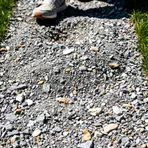
Small loose stones and pebbles used on paths or driveways
 56
3.9
56
3.9
A dark sticky material used to make roads and keep roofs dry
 41
3.3
41
3.3
A hard smooth surface or material made from tar and small stones used for roads and airports
 5
7.7
5
7.7
A rounded stone used to pave old streets
 3
2.8
3
2.8
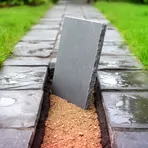
A flat piece of stone used to make a hard surface for paths or roads
 2
3.6
2
3.6
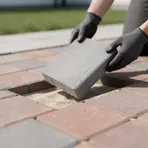
A flat stone or concrete block used to make paths and patios
 1
2.2
1
2.2
A hard surface, like a road, made for people and vehicles to move on


 1
8.6
1
8.6
A road surface made from tar and small stones
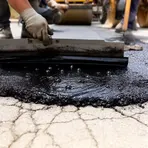
A dark tar-like material used to make roads and keep surfaces dry
How Durable

Surface Forms
Morphology
The meaning 'a substance used for surfacing roads or paths' is directly and transparently derived from combining 'paving' (surface material for walking or driving) with 'material' (a substance). This is a straightforward, compositional noun phrase found across languages and thus a B1 learner who knows both words should readily infer the meaning.
Etymology
The phrase paving material comes from the simple idea of paving—laying down stones, gravel, or asphalt to make a road or path—and material, the stuff used. So, 'paving material' means the substance used to make a firm, flat surface like a road, sidewalk, or driveway.