
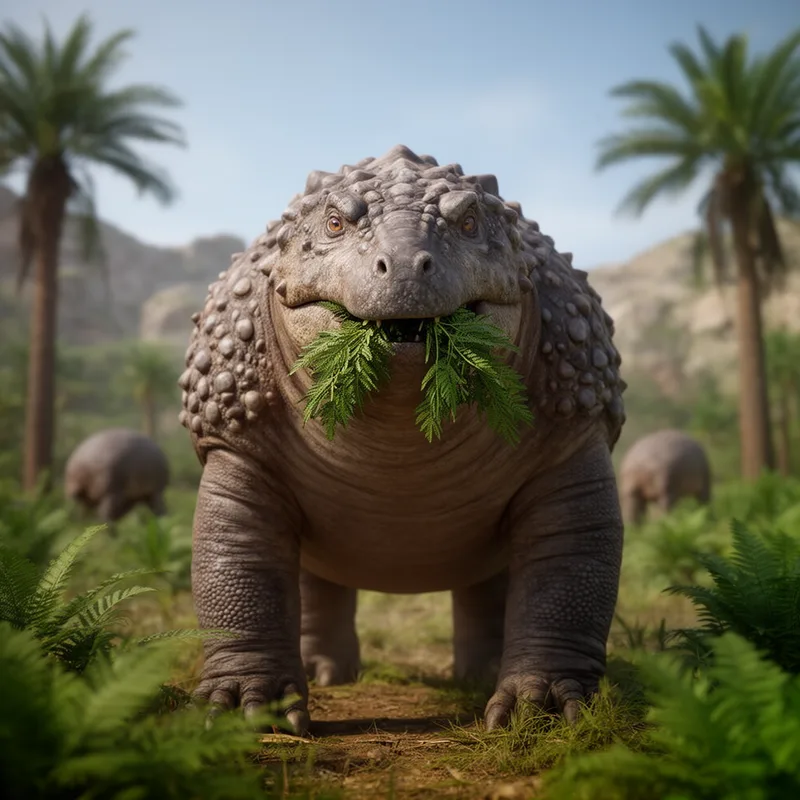
pareiasaurian


 1
9.9
- adjective
- /ˌpɛrɪəˈsɔrɪən/
- Specialized
- The paleontologist studied the pareiasaurian fossils to learn more about prehistoric herbivores.
Examples
-
Scientists believe that pareiasaurian species played a key role in their ancient ecosystems.
-
The pareiasaurian fossils were discovered in South Africa.
-
A pareiasaurian skull was the highlight of the museum's Permian exhibit.
-
Scientists studied the pareiasaurian anatomy to understand its diet.
-
The pareiasaurian fossils found in the cave provide insight into these ancient reptiles.
-
Scientists study pareiasaurian characteristics to better understand the evolution of herbivorous reptiles.
-
Paleontologists have discovered new pareiasaurian species that lived millions of years ago.
Synonyms
 2
9.9
Having the shape and scaly skin of a lizard
Surface Forms
Morphology
pareiasaurian = pareiasaur (semi-transparent) = pareiasaur + ian
Formed by the productive suffix '-ian' attached to the taxonomic name 'pareiasaur'; the morphological process is regular but the base is highly technical and unlikely to be familiar to average learners.
Etymology
Pareiasaurian comes from Greek parts pareia 'cheek' and sauros 'lizard'. Think of the same 'saur' as in dinosaur, so pareiasaurian means 'of the cheek-lizard' and describes things related to those large, plant-eating reptiles from the Permian, long before the dinosaurs.