
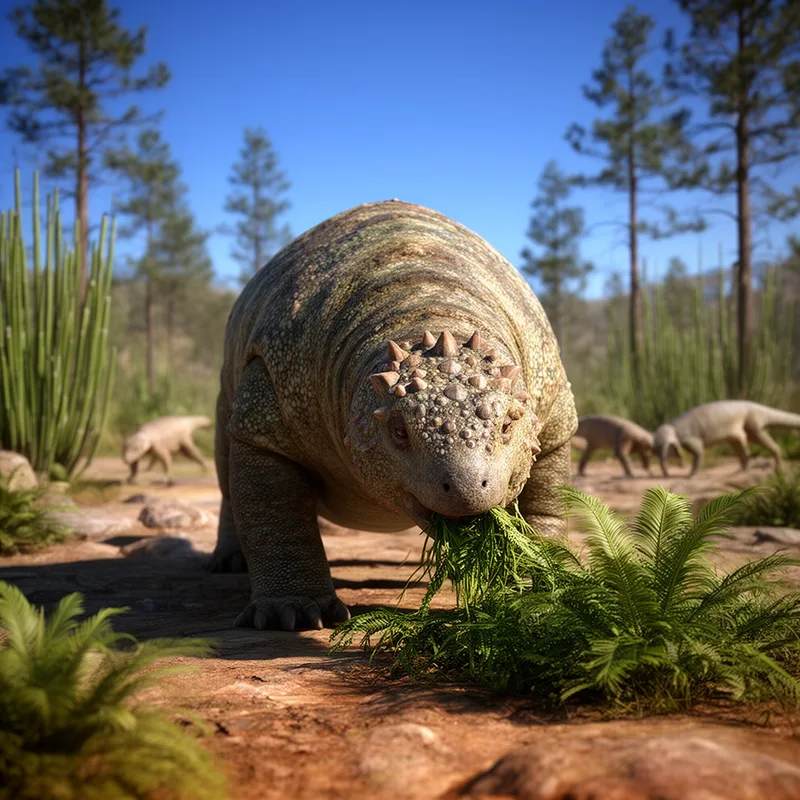
pareiasaurian
- noun
- /ˌpɛrɪəˈsɔriən/
- Specialized
- A museum exhibit features a life-sized model of a pareiasaurian to educate visitors about prehistoric life.
Examples
-
The paleontologist carefully examined the skull of a pareiasaurian found in the desert.
-
Scientists believe that pareiasaurians played an important role in the Permian ecosystem.
-
The pareiasaurian fossils were discovered in South Africa.
-
Many pareiasaurians were large and slow-moving creatures.
-
Scientists discovered fossils of a pareiasaurian that lived over 250 million years ago.
-
The large size and unique features of the pareiasaurian suggest it was a dominant herbivore in its ecosystem.
-
Research shows that the pareiasaurian had thick, bony skin to protect itself from predators.
Surface Forms
Morphology
pareiasaurian = pareiasaur (semi-transparent) = pareiasaur + ian
Derived by the regular suffix '-ian' from the taxonomic name 'pareiasaur'; the formation is regular but the base term is technical and unfamiliar to most learners.
Etymology
Pareiasaurian comes from Greek parts pareia 'cheek' and sauros 'lizard'. The 'sauros' is the same root as in dinosaur, so a pareiasaurian is one of the big 'cheek-lizards' — an extinct plant-eating reptile from the Permian, long before the dinosaurs.

