
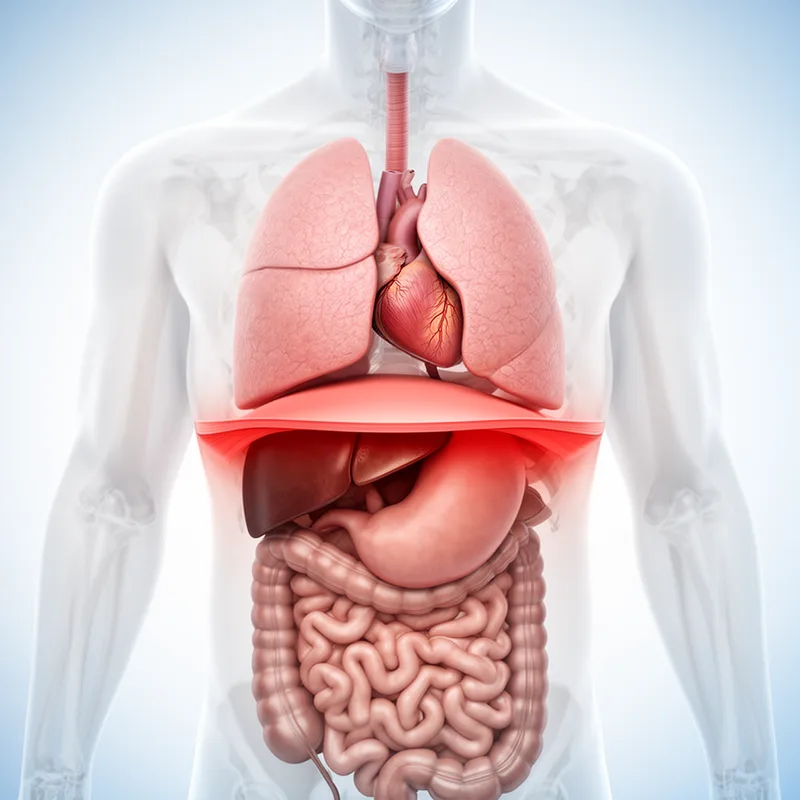
paraphragm
- noun
- /ˈpɛrəˌfræɡm/
- Specialized
- The paraphragm divides the thoracic and abdominal cavities in some animals.
Examples
-
The paraphragm is a crucial muscle for breathing.
-
Damage to the paraphragm can affect the internal organization of the body.
-
Scientists studied the function of the paraphragm in separating different organs.
-
Can you explain how the paraphragm works?
-
The paraphragm serves as a vital barrier that separates the chest and abdominal cavities in mammals.
-
In humans, the paraphragm plays a key role in respiration by creating a pressure difference.
-
The paraphragm acts as a partition between the lungs and the stomach, ensuring proper organ placement.
Synonyms

 74
4.5
74
4.5

A thin, flexible layer that covers or separates parts of a living thing and acts as a barrier in technology
 20
4.3
20
4.3
Dividing something into separate parts, often with a border
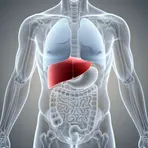 16
5.4
16
5.4
A large muscle under the lungs that helps you breathe
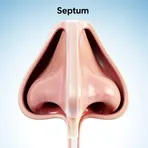 15
6.7
15
6.7
A thin wall that divides two spaces inside the body, for example the nose or heart
How Thick

Surface Forms
Etymology
The word paraphragm comes from Greek parts para- 'beside' and phragm 'fence' or 'barrier'. So in the body a paraphragm is like a thin 'wall' that separates the chest and belly and helps each area work correctly.