

to outflank
 5
7.2
5
7.2

- verb
- /aʊtˈflæŋk/
- We're trying to outflank Porterfield's armies!
- outflank their defenses
- outflank his enemy
- outflank our troops
Loading YouTube…
Watch on YouTubeThe miners tried to outflank the toughest positions, especially at Blair and Crooked Creek, but machine gun and rifle fire forced them back.
- The miners tried to outflank the toughest positions, especially at Blair and Crooked Creek, but machine gun and rifle fire forced them back.
Examples
-
We've got to outflank them.
-
General of the Army Douglas MacArthur organized X Corps in August 1950 to carry out his plan to outflank the North Korean Army with an amphibious landing at Inchon.
Academic text (1995) -
They will go around and try to outflank you.
-
If the Persians found it, they could outflank you.
-
The Persians could use it to outflank us.
-
If we go along this ridgeline, we can probably outflank it.
-
The task of the commander was to outflank his enemy, envelop him, and destroy his forces.
Academic text (1999) -
They outflanked us, so we had to withdraw.
-
Sherman's forces are now halted; prisoners report he dares not seek to outflank us again for fear of the casualties he would sustain from our rifles.
Fiction book (1992) -
The general devised a strategy to outflank the enemy by circumventing their defenses.
Synonyms
 60
5.0
60
5.0
To move to the side of something, often to gain an advantage
 49
5.1
49
5.1
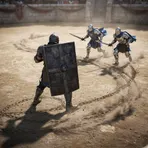
Move around the side of an enemy to attack from behind
How Successful

Surface Forms
Morphology
Etymology
Outflank joins out- meaning 'outside' and flank meaning 'side', and in military use it means to move around the side of an enemy to gain an advantage in battle. So, to outflank an army is to go around its side to attack from a place the enemy does not expect.