

to orientate
- verb
- /ˈɔːrɪənˌteɪt/
- UK
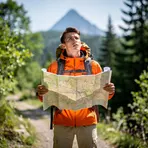
- At the start of the hike, we stopped to orientate ourselves using the map and the sun.
Loading YouTube…
Watch on YouTubeThe way that the light will then be orientated will depend on the magnetic field.
- The way that the light will then be orientated will depend on the magnetic field.
Examples
-
To successfully navigate the city, you need to orientate yourself with the major landmarks.
-
After arriving at the new school, she took a moment to orientate herself before heading to class.
-
Give me a chance to orientate myself for the day.
-
We can use that to orientate.
-
First of all, we have to get orientated.
-
If you have not been fully orientated, you must file a complaint with Personnel!
-
Why don't you go on back there, get yourself orientated?
-
Once you get settled, why don't you and I take a tour of the property and get orientated.
Synonyms

 159
2.5
159
2.5

To put something in a particular place carefully
 144
3.0
144
3.0
To turn around a central point, like a wheel or planet
 20
4.1
20
4.1
To find where you are in the area around you
 8
5.6
8
5.6
To change the direction or main focus of something
 2
4.9
2
4.9
To find where you are and what to do in a new place

To adjust direction or focus after a change
Antonyms

How Oriented

Surface Forms
Morphology
Etymology
Orientate comes from the root orient, from an old word oriens meaning 'east' or 'rising'. It first meant 'turn toward the east', like facing the rising sun, so to orientate is to find or set your direction, which is why we also use orientation when someone is learning a new place.