

opera cloak
 1
8.1
1
8.1

- noun
- /ˈoʊpərə kloʊk/
- Archaic
- COLTER: Lilly awoke in an evening dress and an opera cloak.
- dress and opera cloak
Examples
-
And an opera cloak.
Fiction book (1993) -
"Lilly awoke in an evening dress and opera cloak.
-
It shows a figure with a face like an animal, dressed in an elaborate opera cloak.
Academic text (2001) -
Lilly awoke in an evening dress and opera cloak.
-
Lilly awoke in an evening dress and opera cloak before heading to the theater.
-
Suzanne pulled the velvet folds of her opera cloak tighter about her shoulders as the evening grew colder.
-
Wrapped in her elegant opera cloak, she made her way to the grand performance at the hall.
Synonyms
 61
3.2
61
3.2
A loose outer coat that fastens at the neck and hangs down the back


 1
4.1
1
4.1
A long coat with a hood that you pull over your head
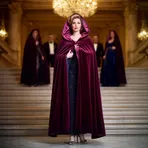
A large loose cloak with a hood that you wear over evening clothes to formal events
How Formal

Surface Forms
Morphology
The meaning is directly compositional: 'opera' specifies the occasion/type and 'cloak' names the outer garment, so a B1 learner who knows both words can infer it is a cloak worn to the opera (a formal evening outerwear). This noun+noun modifier pattern is common and cross-linguistically transparent, making the expression immediately understandable from its parts.
Etymology
Opera cloak: The name opera cloak comes from the simple image of a large cloak worn to the opera, where people covered their fine clothes and kept warm. That's why it now means 'a large, formal cloak worn over evening clothes'.