

nonvascular plant
- noun
- /nɒnˈvæskjʊlər plænt/
- Specialized
- Mosses are classified as nonvascular plants because they do not have specialized tissues to transport water and nutrients.
Examples
-
A nonvascular plant does not have xylem or phloem.
-
Mosses are a type of nonvascular plant.
-
Because it lacks true roots and stems, a nonvascular plant absorbs water directly through its surfaces.
-
Mosses are a common type of nonvascular plant found in damp, shady areas.
-
Unlike ferns, a nonvascular plant does not have xylem or phloem to transport water.
-
Unlike trees and flowers, nonvascular plants like liverworts absorb water directly through their surfaces.
-
Scientists study nonvascular plants to better understand how they survive in damp environments without a vascular system.
Synonyms

A small plant like a moss, liverwort, hornwort that has no true roots and no true stems
Antonyms
- Specialized


 1
3.9
1
3.9
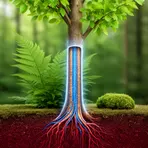
A plant with special tubes that carry water and nutrients, like ferns or trees
How Vascular
- Specialized

- Specialized
Surface Forms
Morphology
The meaning is directly compositional: 'nonvascular' (= lacking vascular/transport tissues) combined with 'plant' yields a plant that lacks xylem/phloem. This negative-prefix + noun structure is a regular, predictable formation (and parallels exist in other languages), so learners who know the constituent words will readily infer the full meaning.
Etymology
Nonvascular plant literally names its parts non and vascular, where non means 'not' and vascular means 'having tubes that carry water'. Because these plants, like mosses, have no internal tubes and soak up water across their surfaces, the name means 'a plant that lacks the usual water-carrying tubes'.