

nonvascular
- adjective
- /nɒnˈvæskjʊlər/
- Specialized
- Unlike vascular plants, nonvascular plants do not have specialized tissues to transport nutrients.
- nonvascular plants
Examples
-
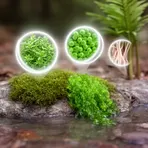
Nonvascular plants, like nonvascular mosses and liverworts, absorb water directly through their cell walls.
-
Mosses and liverworts are common examples of nonvascular plants found in damp environments.
-
Unlike ferns, nonvascular plants do not have true roots, stems, or leaves.
-
Scientists study nonvascular species to understand the early evolution of land plants.
-
Mosses are a type of nonvascular plant.
-
Are nonvascular plants less complex than vascular ones?
-
Mosses are examples of nonvascular plants that thrive in moist environments without needing complex systems.
Antonyms



Compounds
- Specialized
An organism that has no tubes to carry water and food, like mosses and algae

Surface Forms
Morphology
Etymology
Nonvascular is made of non- 'not' and vascular, which means 'vessel' or 'tube'. So a nonvascular plant does not have the tubes that move water and food, as in mosses and liverworts.